
When Does a DIY Project Become a Code Problem?
Direct Answer: A DIY project usually needs a permit once it changes the structure, the electrical system, the plumbing, the heating/cooling system, the building's footprint or height, or how a space is used (for example, turning a basement into a bedroom). Purely cosmetic work — painting, trim, flooring over a sound subfloor, swapping a faucet or a light fixture — often does not. But thresholds, owner-builder rules, and trade-license requirements are set locally, so the only reliable answer for do I need a permit for DIY comes from checking your municipality's permit rules and your state building code before you start.
Key Takeaways
- Permits track what you alter, not how skilled you are: structural, electrical, plumbing, and mechanical (HVAC) work are the most commonly regulated trades.
- "Cosmetic" finish work (paint, flooring, cabinets, fixtures on existing supply lines) is frequently permit-exempt, but replacing the system behind the finish usually is not.
- Creating or expanding habitable space — bedrooms, additions, finished basements, garage conversions — almost always triggers a permit and often zoning review.
- Many states let an owner pull a permit for their own home (owner-builder), but that does not waive inspections, and licensed trades may still be required for electrical or plumbing.
- Local variables — zoning district, shoreland/floodplain/historic overlays, setbacks, and impervious-surface limits — can require permits even for work that seems minor.
- The costliest mistake to avoid is working first and asking later: unpermitted work can mean stop-work orders, fines, removal, and problems at resale or insurance time.
- When a value isn't published, the answer is "verify with the local permit office or the adopted code section" — not "assume you're fine."
On This Page
Jump to any section of this guide:
- Plain-English Explanation: What "Becomes a Code Problem" Really Means
- When the Permit Rule Usually Applies
- When Exceptions May Apply
- Local Variables That Change the Answer
- Documents and Facts to Gather Before You Start
- Common Mistakes
- Example Scenarios
- Practical Checklist
- Definitions
- Why Local Rules Change the Answer
- A Local Example: Sturgeon Bay, Door County, Wisconsin
- How GovCodex Helps
- Frequently Asked Questions
Plain-English Explanation: What "Becomes a Code Problem" Really Means
When people ask do I need a permit for DIY, they're usually picturing the difficulty of the job. Codes don't work that way. A permit is the government's record that a specific change to a building was reviewed against the adopted code and inspected. The trigger is what part of the building you touch, not whether you hired help or did it yourself on a Saturday.
The mental model that works almost everywhere: there is a line between cosmetic work and regulated work.
- Cosmetic work changes how a space looks or feels without altering the structure, the systems that make it safe, or how the space is legally used. Think paint, wallpaper, trim, new flooring over a sound subfloor, replacing cabinets, or swapping a faucet onto existing supply lines.
- Regulated work changes the structure (load paths, walls, footings, roof), the electrical system, the plumbing system, the mechanical/HVAC system, the building envelope, or the use of a room.
A project "becomes a code problem" the moment it crosses that line and you proceed without the review the code requires. The work itself might be perfectly good — but unpermitted, it's a liability.
Why It Matters
Permits exist for three practical reasons, and each is a real cost if you skip them:
- Safety. Electrical, structural, and gas/plumbing failures are the work that injures people and burns down houses. Inspections are the checkpoint.
- Legality and value. Unpermitted work can surface in an appraisal, a home inspection at resale, or an insurance claim. A finished basement bedroom that was never permitted may not count as legal living area — and an insurer can contest a claim tied to unpermitted wiring.
- Enforcement. Municipalities can issue stop-work orders, daily fines, and orders to open up finished walls so an inspector can verify hidden work. "Retroactive" permitting is possible but usually more expensive and stressful than doing it upfront.
If you're still mapping the broader permit landscape, our explainer on the difference between building, zoning, electrical, and plumbing permits pairs well with this article.
When the Permit Rule Usually Applies
While exact thresholds are local, the following categories of DIY work require a permit in the large majority of U.S. jurisdictions. Treat this as "expect a permit unless your local code says otherwise."
| Work category | Typical examples | Usually needs a permit? | Common trade/inspection |
|---|---|---|---|
| Structural | Removing/altering a wall, new beam, adding/cutting joists, new footings, additions | Almost always | Building |
| Electrical | New circuits, panel work, moving outlets, new wiring runs | Usually | Electrical |
| Plumbing | New supply/waste lines, moving fixtures, water heater swap | Usually | Plumbing |
| Mechanical (HVAC) | New furnace, A/C, ductwork, gas line work | Usually | Mechanical |
| Footprint/height | Decks, additions, garages, sheds over a size threshold, dormers | Usually | Building + Zoning |
| Change of use / habitable space | Finishing a basement, garage-to-room, adding a bedroom or ADU | Almost always | Building + Zoning |
| Roofing/structural envelope | Re-roof (varies), structural roof changes, window openings resized | Often | Building |
| Cosmetic finishes | Paint, trim, flooring over sound subfloor, cabinets, like-for-like fixtures | Often not | Usually none |
The pattern: the deeper into the building's bones and systems you go, the more likely a permit is required. Adding habitable space — a place intended for living, sleeping, eating, or cooking — is among the strongest triggers because it implicates egress windows, smoke/CO alarms, ceiling heights, light and ventilation, and heating.
For one of the most-searched edge cases, see do I need a permit to build a deck, where the answer hinges on height off grade, attachment to the house, and local size thresholds. The footings underneath a deck are their own code question — frost-depth rules vary by region, as covered in deck footings, frost depth, and code requirements.
When Exceptions May Apply
Codes carve out exemptions, and these are where homeowners get genuine relief — but read them precisely, because the wording is narrow.
- Minor/cosmetic maintenance. Many codes exempt painting, papering, tiling, carpeting, cabinets, countertops, and similar finish work that doesn't touch structure or systems.
- Like-for-like fixture replacement. Swapping a faucet, a light fixture on an existing box, or a toilet in the same location is often exempt — replacing the supply line, drain, or wiring behind it usually is not.
- Small detached structures. Many municipalities set a square-footage floor (for example, sheds under a stated size) below which no building permit is needed — but zoning setback rules can still apply even to an exempt shed. See can I build a garage or shed in my backyard.
- Owner-builder provisions. Many states let the owner of a single-family home pull the permit and do the work themselves rather than hiring a licensed contractor. This is an exemption from the contractor-credential requirement, not an exemption from permits or inspections.
A crucial caveat: an exemption from a building permit does not exempt you from zoning, electrical, plumbing, or mechanical permits, or from overlay rules (shoreland, floodplain, historic). Each is a separate gate.
Local Variables That Change the Answer
Two identical projects on two different lots can have opposite permit answers. The variables that flip it:
- Which code your state and municipality adopted, and which edition. Residential work in many states follows a version of the International Residential Code (IRC); some states, like Wisconsin, administer their own Uniform Dwelling Code for one- and two-family homes.
- Owner-builder vs. licensed-trade rules. Some jurisdictions allow homeowners to do their own electrical/plumbing on their primary residence; others require licensed trades regardless of who owns the home.
- Zoning district. Setbacks, lot coverage, and use rules differ by district even within one town. Start with how to read a zoning map and what is a setback.
- Overlays. Shoreland, floodplain, wetland, and historic-district overlays add permits and standards on top of base zoning — sometimes for grading or vegetation removal alone.
- Impervious-surface limits. Adding patios, driveways, or large structures can bump you past a coverage cap. See what is impervious surface coverage.
- Whether a variance is needed. If your scope can't meet a setback or coverage rule, you may need relief before any permit issues — see the homeowner's guide to zoning variances.
- Project size, height, use, and method — and whether the result is attached, structural, habitable, wired, plumbed, or heated. Each of those words is a trigger in most codes.
Documents and Facts to Gather Before You Start
Walk into the question with these in hand and most of the answer becomes self-evident:
- Your property address and parcel ID (from the county parcel/GIS viewer).
- Your zoning district and any overlay districts (shoreland, floodplain, historic).
- A plat of survey or site plan showing structures, setbacks, and lot lines.
- The adopted code your municipality enforces (state code edition + local amendments).
- The permit-required / permit-exempt list published by your building department.
- The relevant permit application(s) and the fee schedule.
- For systems work: whether owner-builder is allowed and whether licensed trades are required.
Our permit application checklist for home renovations expands this into a submission-ready list.
Common Mistakes
- Assuming "it's my house, I can do what I want." Ownership doesn't waive code review.
- Treating one permit as all permits. A building permit doesn't cover the new circuit you ran.
- Confusing cosmetic with structural. "I just opened up the wall" is structural the moment it's load-bearing.
- Forgetting zoning. A permit-exempt shed can still violate a setback and have to move.
- Skipping the inspection. A permit without sign-off is an open permit that haunts a future sale.
- Ignoring overlays. Near water or in a historic district, even grading or a new patio can need review.
- Underestimating cost. Permit fees are usually modest; see how much does a building permit cost. For a larger remodel, also model the build cost — our guide to estimating the cost of a home addition helps.
Example Scenarios
1. New bathroom in the basement. Cosmetic? No. You're adding plumbing (supply + waste), likely electrical (circuits, GFCI), possibly mechanical (ventilation), and creating habitable space. Expect building + plumbing + electrical permits and inspections.
2. Replacing kitchen cabinets and countertops, same layout. Usually cosmetic and permit-exempt — until you move the sink (plumbing), add circuits (electrical), or remove a wall (structural).
3. Finishing an attic into a bedroom. Habitable space. Triggers egress, ceiling-height, insulation, smoke/CO, and often structural and electrical review. Permit required almost everywhere.
4. Building a 100-square-foot shed. May be building-permit-exempt by size — but zoning setbacks still apply, and near water a shoreland overlay can require a zoning permit anyway.
5. Swapping a light fixture. Like-for-like on an existing box is commonly exempt. Running a new circuit to add can lighting is electrical work that usually needs a permit.
6. Converting a garage into an apartment. This stacks nearly every trigger at once — change of use, new habitable space, plumbing, electrical, mechanical, egress, and almost always zoning review for the added dwelling unit. See can I turn my garage into an apartment.
Practical Checklist
- Identify your parcel, zoning district, and any overlays.
- Pull your municipality's permit-required vs. permit-exempt list.
- Classify your work: structural? electrical? plumbing? mechanical? change of use?
- Check whether you're creating or expanding habitable space.
- Confirm owner-builder eligibility and any licensed-trade requirements.
- Verify zoning setbacks, lot coverage, and impervious limits for the result.
- Locate the correct application(s) and the fee schedule.
- Note which inspections will be required and at what stages.
- Only then start work — or apply first.
People Also Ask
- Does painting need a permit? Usually no.
- Do I need a permit to replace a water heater? Often yes (plumbing/mechanical).
- Can I do my own electrical work? Depends on local owner-builder and license rules.
- Is a permit needed to finish a basement? Almost always, especially with a bedroom.
Definitions
- Permit: Official authorization to perform regulated work, reviewed against the adopted code and verified by inspection.
- Cosmetic work: Changes to finishes/appearance that don't alter structure, systems, footprint, or use.
- Regulated (structural/MEP) work: Work affecting structure, mechanical, electrical, or plumbing systems.
- Habitable space: Space used for living, sleeping, eating, or cooking; excludes bathrooms, closets, halls, storage, and utility spaces.
- Owner-builder: A property owner who pulls a permit and performs work on their own dwelling instead of hiring a credentialed contractor.
- Uniform Dwelling Code (UDC): Wisconsin's statewide construction and inspection code for one- and two-family dwellings.
- Setback: The minimum required distance between a structure and a lot line or feature.
- Overlay district: A zoning layer (shoreland, floodplain, historic) adding rules on top of base zoning.
- Ordinary high-water mark (OHWM): The reference line on a waterbody from which shoreland setbacks are measured.
- Stop-work order: A municipal directive halting work performed without required permits.
Why Local Rules Change the Answer
The permit question is local by design, and the differences are specific — not vague. Here's exactly where to look instead of guessing:
- State code adoption. Confirm which code and edition your state and municipality enforce. In Wisconsin, one- and two-family homes are governed by the Uniform Dwelling Code, Wis. Admin. Code ch. SPS 320–325; the building-permit requirement lives in SPS 320.08 and the permit procedure in SPS 320.09.
- Municipality vs. county jurisdiction. Cities and villages often run their own building inspection; in unincorporated areas the county or a state-delegated agency may. Find the administering agency before you find the form.
- Zoning district + overlays. Pull the zoning map and the zoning ordinance for your district's setbacks, height, and lot-coverage rules, then check for shoreland, floodplain, wetland, or historic overlays.
- Parcel boundaries and easements. Use the county parcel/GIS viewer and your plat of survey to confirm lot lines and recorded easements — they constrain where you can build even when the building code is silent.
- The trigger words. Re-read your scope for attached, structural, habitable, wired, plumbed, heated, size, height, use. Each maps to a code section.
Name the documents to check: the adopted code chapter (in Wisconsin, SPS 320–325), the municipal permit-required list, the zoning ordinance and zoning map, the shoreland/floodplain ordinance, the county parcel/GIS viewer, the relevant permit application PDF, and the fee schedule. Contacting the office is the right move only when those published sources don't resolve a genuinely ambiguous case — for instance, an owner-builder eligibility edge case or an unmapped overlay. Our guide to finding your local building code walks through where each of these documents lives.
A Local Example: Sturgeon Bay, Door County, Wisconsin
This section separates the general rule from local specifics, with sources. Treat unverified values as needs_research.
General rule (statewide). In Wisconsin, one- and two-family dwellings are governed by the Uniform Dwelling Code (UDC), Wis. Admin. Code ch. SPS 320–325. Under SPS 320.08(1), a Wisconsin uniform building permit must be obtained from the municipality (or a registered UDC inspection agency) "before any on-site construction, including excavation for a structure, may begin." Inspections are part of the framework, and the permit procedure is set in SPS 320.09. Separately, a Wisconsin Dwelling Contractor certification (or engaging a Dwelling Contractor Qualifier) is generally required to obtain a building permit for such dwellings, subject to statutory exceptions under Wis. Stat. § 101.654 that can allow an owner to do work on their own residence — confirm the exact exemption language with DSPS, because eligibility is narrow. Shoreland properties are additionally regulated: under NR 115.03(8), shoreland is land within 1,000 feet of a lake, pond, or flowage, or 300 feet from a river or stream (or to the landward edge of the floodplain, whichever is greater), measured from the ordinary high-water mark — and county shoreland zoning applies on top of the building code.
Local specifics (Sturgeon Bay / Door County).
- Administering agency. Per the City of Sturgeon Bay Building Inspections page, "Building Code administration and inspections are provided by Inspection Specialists, LLC," operating out of City Hall. (Source: City of Sturgeon Bay Building Inspections page.)
- Applications & fees. The city's Building Inspections page publishes a building permit application and a fee schedule. The specific permit categories beyond the building permit, and the current fee amounts, are
needs_research— verify on the live city documents. (Source: City of Sturgeon Bay Building Inspections page.) - Permit-exempt thresholds (e.g., shed size, cosmetic-only exemptions).
needs_research— confirm against the city's permit-required list and the adopted UDC. - Shoreland setback from the ordinary high-water mark and impervious limits for Door County shoreland parcels.
needs_research— verify against the Door County shoreland zoning ordinance and NR 115. A 75-foot OHWM building setback is a common statewide baseline, but the controlling value is the county ordinance, which isnot_available_from_current_sourceshere. - Owner-builder eligibility specifics in the city.
needs_research— confirm with the inspector and DSPS.
Net: in Sturgeon Bay, expect a city building permit for structural, electrical, plumbing, HVAC, or footprint/use changes (each potentially a separate trade permit), likely a separate zoning permit, and — for waterfront parcels — Door County shoreland review. Confirm thresholds and fees against the live city documents before you start.
How GovCodex Helps
GovCodex is a local-code-aware planning and permitting assistant, not a generic chatbot. For a DIY project, it helps you move from "I want to build this" to "I understand the rules, risks, documents, and next steps for my property":
- Identifies permit triggers by classifying your scope as structural, electrical, plumbing, mechanical, footprint, or change-of-use.
- Interprets local code by searching the adopted ordinance and surfacing the relevant sections (for example, Wisconsin's SPS 320–325 or your municipality's amendments).
- Pulls parcel and GIS context — zoning district, overlays, setbacks, and lot coverage — for your specific address.
- Lets you upload your survey, photos, and PDFs so the analysis is grounded in your real lot, not a generic example.
- Builds a permit-readiness checklist tailored to the permits your project actually needs.
- Drafts plain-English project descriptions and site-plan notes suitable for an application.
- Compares options (for example, a permit-exempt shed size vs. a larger structure that triggers review).
- Flags missing information and separates established facts from assumptions, with human-in-the-loop review where a value must be verified.
- Finds the right application and lays out localized next steps, including which inspections to expect and when.
Describe your project, upload any site documents or photos you already have, and GovCodex can help organize the rules, documents, and next steps for your property.
Frequently Asked Questions
Do I need a permit for DIY work if I own the home?
Ownership does not exempt you from permits. The requirement tracks what you alter — structure, electrical, plumbing, mechanical, footprint, or use — not who does the work. Many states do allow an owner to pull the permit themselves (owner-builder), but that's a substitute for hiring a credentialed contractor, not a waiver of the permit or inspections.
What kinds of DIY projects usually do NOT need a permit?
Purely cosmetic work is frequently exempt: painting, wallpaper, trim, flooring over a sound subfloor, replacing cabinets and countertops, and swapping fixtures like-for-like on existing connections. The exemption ends the moment you touch structure, run new wiring or plumbing, or change how a room is used. Always confirm against your municipality's published permit-exempt list.
Does replacing a light fixture or faucet need a permit?
Like-for-like replacement on an existing box or existing supply lines is commonly exempt. It becomes regulated when you add a new circuit, move a fixture to a new location, or replace the wiring, supply line, or drain behind it. Check your local electrical and plumbing permit rules for the exact line.
When does finishing a basement need a permit?
Finishing a basement almost always needs a permit because it creates habitable space, which implicates egress windows, ceiling height, smoke/CO alarms, insulation, electrical, and often plumbing and mechanical work. Expect building plus the relevant trade permits and inspections in most jurisdictions.
Can I do my own electrical or plumbing work?
It depends entirely on local rules. Some jurisdictions allow a homeowner to do electrical or plumbing work on their own primary residence under an owner-builder provision; others require licensed trades regardless of ownership. Verify both the permit requirement and the license requirement with your municipality before starting.
What happens if I do work without a permit?
Common consequences include a stop-work order, fines (sometimes daily), and an order to open finished walls so an inspector can verify hidden work. Unpermitted work can also reduce home value, complicate a sale, and jeopardize insurance claims tied to the work. Retroactive permitting is sometimes possible but usually costlier than permitting upfront.
Is a building permit the same as a zoning permit?
No. A building permit certifies that construction meets the building code; a zoning permit confirms the project complies with use, setback, height, and coverage rules. A project can need both, and a building-permit exemption (like a small shed) does not exempt you from zoning. See our guide on the types of building permits explained.
Do small sheds or detached structures need a permit?
Many municipalities exempt detached accessory structures below a square-footage threshold from a building permit. However, zoning setbacks and overlay rules (such as shoreland) can still apply, so an "exempt" shed may still require a zoning permit or have to be relocated. Confirm both the size threshold and the zoning rules for your lot.
How do I find my exact local thresholds?
Start with your municipality's building department page for the permit-required list and applications, then check the zoning ordinance and zoning map for setbacks and overlays, and the county parcel/GIS viewer for your lot. Our walkthrough on how to find your local building code shows where each document lives.
Does proximity to water or a floodplain change the answer?
Yes, significantly. Shoreland, floodplain, and wetland overlays add permits and standards on top of base zoning — sometimes requiring review even for grading, vegetation removal, or a new patio. In Wisconsin, shoreland is land within 1,000 feet of a lake, pond, or flowage, or 300 feet of a river or stream (or to the floodplain edge, whichever is greater) under NR 115.03(8), and county shoreland zoning applies in addition to the building code.
How much do permits usually cost for DIY projects?
Fees vary widely by municipality and project value, but for typical DIY-scale work they're usually modest relative to the project. Verify the current amounts on your municipality's fee schedule. Our guide on how much does a building permit cost explains how fees are calculated.
Related Articles

Can I Turn My Garage Into an Apartment?
Whether you can convert a garage to an apartment ADU depends on your zoning district, parking, utilities, and building-code rules like egress and fire separation. Here's how to find your real answer.
Fence Permit Rules: Height, Setbacks, and Property Lines Explained
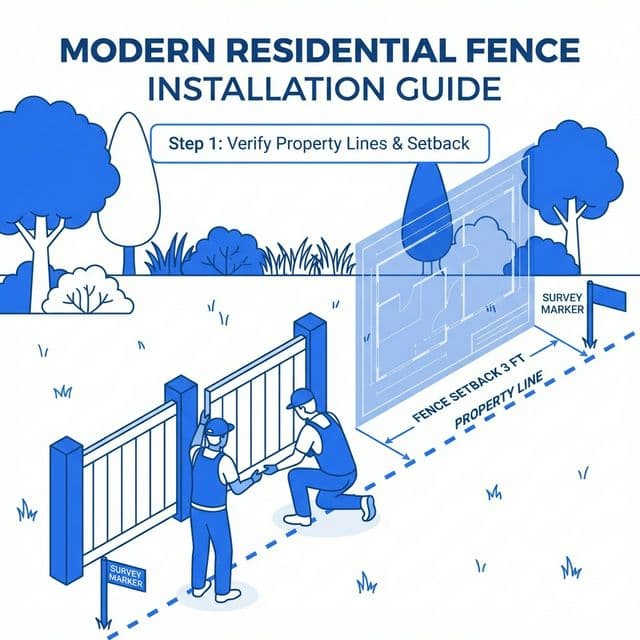
Fence permit rules vary widely by city, but the same handful of factors—height, yard location, setbacks, corner-lot sightlines, and your true property line—decide nearly every case. Here's how to read them for your lot.

Permit Application Checklist for Home Renovations
A practical, local-code-aware building permit document checklist for home renovations — site plans, drawings, survey, structural details, and the local variables that change what your jurisdiction actually requires.