
How to Read a Zoning Map Before You Build

Direct Answer: To read a zoning map, find your property's parcel ID or address in your municipal or county GIS viewer, locate your parcel boundary, then identify the zoning district color or code that covers it and check whether any overlay districts (shoreland, floodplain, historic) also apply. The district code is your key into the zoning ordinance, where the actual setback, height, coverage, and use rules live — but those values vary by municipality, county, zoning district, and overlay, so always confirm the code text and the parcel boundary before you build.
Key Takeaways
- A zoning map shows where rules apply; the zoning ordinance text shows what the rules are. You need both, plus your parcel's exact boundary.
- Start by locating your parcel ID (PIN) or address in your municipal or county GIS parcel viewer, then read the zoning district code that covers your lot.
- Overlay districts (shoreland, floodplain, wetland, historic) stack additional rules on top of the base zoning district and are easy to miss.
- The right map may not be at the city level: in Wisconsin, shoreland zoning is often administered at the county level even for land near a city.
- GIS maps usually carry a parcel boundary confidence caveat — most viewers state they are "not a legal survey," so a recorded survey controls a dispute, not the web map.
- A future land use map is a planning document, not the regulatory map; do not confuse it with the adopted zoning map that actually governs permits.
- For most habitable, structural, plumbed, wired, or heated work you will usually still need a permit; the zoning map tells you the dimensional limits, not whether a permit is waived.
On This Page
Jump to any section of this guide:
- Reading a Zoning Map: The Plain-English Version
- Local Variables That Change the Answer
- Documents and Facts to Gather
- Step-by-Step: How to Read a Zoning Map
- Common Mistakes
- Example Scenarios
- Comparison: Which Map Am I Looking At?
- Definitions
- Why Local Rules Change the Answer
- A Local Example: Sturgeon Bay, Door County, Wisconsin
- How GovCodex Helps
- Frequently Asked Questions
Reading a Zoning Map: The Plain-English Version
Learning how to read a zoning map is the single most useful research skill before any building project, because the map is where your property's rights and limits begin. A zoning map is a color-coded or labeled map of a jurisdiction that divides land into districts — like single-family residential, multi-family, commercial, or industrial — and assigns each parcel to one. The map answers the where: which set of rules applies to your specific lot. It does not, by itself, tell you the exact numbers. For those, you cross-reference the district code (for example, "R-1" or "RS-8") against the written zoning ordinance, which spells out permitted uses, minimum lot size, setbacks, building height, and coverage limits.
Think of it as a two-document system. The map points you to a chapter; the ordinance is the chapter. If you only read the map, you know your district but not your rules. If you only read the ordinance, you know the rules for every district but not which one is yours. You need to connect the two through your parcel — the legally defined unit of land identified by a parcel ID (often called a PIN, parcel number, or tax key).
A zoning map is not a static poster on a wall, either. Most jurisdictions now publish their zoning as an interactive layer inside a geographic information system (GIS) viewer, where you can toggle parcels, districts, overlays, aerial imagery, and flood layers on and off. That is good news for homeowners: the same screen that shows your lot can usually show your district and your overlays at once. The skill is knowing which layers to turn on, how to read the legend, and — critically — which lines on the screen are regulatory and which are merely advisory or approximate.
Why It Matters
Most expensive permitting mistakes start with a wrong assumption about the map. Homeowners assume a deck can go to the property line, that a shed is "too small to matter," or that the rules are the same as a neighbor's lot one street over. The zoning map is where you catch those errors for free, before you pour a footing or order materials. Reading it correctly tells you whether your project even fits inside the buildable envelope — the area left after setbacks, easements, and coverage limits are subtracted from your lot. If you want the deep version of one of those constraints, see What Is a Setback and Why Does It Matter?.
A wrong reading can cost you in three ways: rework (a structure that has to be torn down or moved because it crossed a setback), delay (a permit kicked back because the application ignored an overlay), and risk (a project that turns out to need a variance you never budgeted for). Each of those is avoidable with twenty minutes on the right map and ten minutes in the ordinance.
When the Rule Usually Applies
You should read the zoning map before any project that changes the footprint, height, use, or impervious coverage of your property: additions, detached garages or sheds, decks, fences, pools, and accessory dwelling units. It also applies before you buy a lot, because the map can reveal that a parcel is mostly unbuildable due to shoreland or floodplain overlays. In nearly all incorporated cities and most counties, an adopted zoning map exists and governs these projects.
When Exceptions May Apply
Some rural townships have no local zoning and rely on county zoning, building code, or sanitary code only. Very minor projects — repainting, like-for-like repairs, small non-structural fixes — usually do not trigger a zoning review even though a building permit threshold may still apply for other reasons. And legally nonconforming ("grandfathered") structures may continue even if they no longer match the current map, though expanding them often forfeits that status. Exceptions are local, so treat them as questions to confirm, not assumptions to rely on.
Local Variables That Change the Answer
The zoning map is standardized in concept but local in every detail. The variables that most often change your answer:
- Which jurisdiction's map governs. Incorporated cities usually have their own municipal zoning map; unincorporated towns may fall under a county zoning map. Shoreland and floodplain layers are frequently administered at the county level under state authority.
- Your base zoning district. R-1 in one city is not R-1 in the next. Lot size minimums, setbacks, and height limits attach to the district name as defined locally, not a national standard.
- Overlay districts. Shoreland, floodplain, wetland, historic-preservation, and airport-approach overlays add rules on top of the base district.
- Parcel boundary confidence. GIS lines are approximate; a recorded plat or survey controls.
- Easements and recorded restrictions that may not appear on the public zoning map at all.
This is why How to Find Your Local Building Code Without Getting Lost is a useful companion read — the zoning map and the building code are different documents from sometimes different agencies.
Documents and Facts to Gather
Before you can read your zoning correctly, collect:
- Parcel ID / PIN and the legal address (from your tax bill or the county GIS viewer).
- A recorded survey or plat if you have one — this is the authoritative boundary.
- The adopted zoning map for the governing jurisdiction (city or county).
- The zoning ordinance text for your specific district.
- Any overlay layers that intersect your parcel (shoreland, floodplain, wetland, historic).
- Easement and deed-restriction documents from your title work.
- Your project description — dimensions, height, use, and whether it is attached, habitable, plumbed, wired, or heated.
Step-by-Step: How to Read a Zoning Map
1. Find your parcel
Open your municipal or county GIS parcel viewer. Search by street address, owner name, or parcel ID. Confirm you have the right parcel by checking the displayed acreage and dimensions against your survey or tax bill. If two parcels share an address (common with corner lots or recently split land), use the PIN, not the address, as the tiebreaker.
2. Identify the base zoning district
Turn on the zoning layer (sometimes a separate "County Zoning" or "Municipal Zoning" layer) and read the district code that covers your parcel. Note the exact code string — "R-2," "RS-8," "PUD" — because that is your lookup key. Watch for parcels that straddle two districts; a line running through your lot is a flag to resolve before you design anything.
3. Check for overlays
Toggle additional layers: shoreland, floodplain (FEMA), wetland, historic district, and airport. Overlays often appear as hatching or a transparent tint, and they are the most commonly missed constraint. If your lot is anywhere near water, a slope, or an older neighborhood, assume an overlay is possible until you have confirmed otherwise.
4. Cross-reference the ordinance
Open the zoning ordinance and find the section for your district. Read permitted uses, minimum lot size, setbacks (front/side/rear), maximum height, and maximum lot coverage and impervious surface limits. If your project touches water, also read the shoreland chapter. Copy the exact figures into your project notes with the section number beside each, so you can defend every number later.
5. Verify the boundary
Because GIS parcel lines are approximate, locate any survey monuments and read the viewer's disclaimer about parcel boundary confidence. For setback-tight projects, a fresh survey is cheap insurance compared with moving a poured foundation.
Common Mistakes
- Reading the future land use map instead of the zoning map. The future land use map shows the community's plan, not the law. Zoning can lag the plan for years.
- Trusting the GIS line as a legal boundary. Most viewers explicitly state they are not a legal survey.
- Missing an overlay because only the base zoning layer was turned on.
- Assuming the city's map covers everything when shoreland or floodplain rules are county- or state-administered.
- Confusing "permitted use" with "no permit needed." A use being allowed in your district does not waive the building permit.
Example Scenarios
Scenario A — Backyard deck. Your parcel is zoned single-family residential. The map confirms the district, and the ordinance gives a rear setback. Your proposed deck fits, but you still need a building permit and footing inspection. Pair this with Do I Need a Permit to Build a Deck? and, for the footings themselves, Deck Footings, Frost Depth, and Code Requirements Explained.
Scenario B — Lakeside shed. The base district allows accessory buildings, but a shoreland overlay may impose a setback from the water — 75 feet from the ordinary high-water mark is the Wisconsin minimum standard under state rule. The shed has to move landward. See Can I Build a Garage or Shed in My Backyard?.
Scenario C — Garage-to-apartment conversion. The map shows a district that may or may not permit a second dwelling unit. The map narrows the question; the use table answers it. See Can I Turn My Garage Into an Apartment?.
Comparison: Which Map Am I Looking At?
| Map type | What it shows | Is it the law? | Use it to… |
|---|---|---|---|
| Adopted zoning map | District boundaries (R-1, C-2, etc.) | Yes — regulatory | Determine setbacks, uses, height limits |
| Future land use map | Long-range planning vision | No — advisory | Anticipate rezonings; not for permits |
| GIS parcel/tax map | Parcel boundaries, parcel ID, ownership | No — reference | Locate your lot, get the PIN |
| FEMA flood map (FIRM) | Flood zones / SFHA | Yes — federal/insurance | Check floodplain overlay obligations |
| Shoreland/wetland layer | Water-related jurisdiction | Yes — state/county | Check OHWM setback, vegetation rules |
A second comparison is worth keeping in your head — not of map types but of map authority, because that is where homeowners lose the most time:
| Question | Where the answer lives | What does NOT answer it |
|---|---|---|
| Which district am I in? | Adopted zoning map / GIS zoning layer | Future land use map |
| What are my setbacks and height limits? | Zoning ordinance text for that district | The map alone |
| Where exactly is my property line? | Recorded survey or plat | GIS parcel line |
| Am I in a flood zone? | FEMA FIRM (msc.fema.gov) | The base zoning map |
| Do I still need a permit? | Building code + permit office | "Permitted use" on the map |
People Also Ask
- Is a zoning map the same as a plat map? No — a plat shows surveyed parcel boundaries; a zoning map shows regulatory districts.
- Can I rely on the county GIS line for my setback measurement? Not for a dispute — use a recorded survey.
- Does the future land use map change my current rights? No — only the adopted zoning map and ordinance do.
Definitions
- Zoning map — The official map dividing a jurisdiction into districts that determine permitted uses and dimensional rules.
- Zoning district — A mapped category (e.g., R-1) with a defined set of allowed uses and limits.
- Parcel ID (PIN) — A unique number identifying a legal parcel in tax and GIS systems.
- Overlay district — A supplemental zone (shoreland, floodplain, historic) adding rules on top of the base district.
- GIS parcel viewer — An online map showing parcel boundaries, ownership, and often zoning layers.
- Future land use map — A comprehensive-plan map showing intended long-term land use; advisory, not regulatory.
- Setback — The minimum required distance between a structure and a property line or water feature.
- Ordinary high-water mark (OHWM) — The point on a shoreline that defines the start of shoreland setback measurement.
- Nonconforming use/structure — A legally pre-existing condition that no longer matches current zoning.
- Buildable envelope — The area of a lot remaining after setbacks, easements, and coverage limits.
Why Local Rules Change the Answer
Zoning is created and administered locally, so the same project can be legal in one place and prohibited a mile away. The variables that drive the difference include the municipality vs. county that holds jurisdiction; the state code adoption that sets the baseline building and shoreland rules; the specific zoning district assigned to your parcel; any overlay (shoreland, wetland, floodplain, historic, airport); the recorded parcel boundaries and easements; and the project's own attributes — its size, height, use, and method, and whether it is attached, structural, habitable, wired, plumbed, or heated.
Rather than telling you to "call your local government," here is exactly what to check. Pull the adopted zoning map and confirm your base district, then read that district's section in the zoning ordinance for setbacks, height, lot coverage, and the use table. Toggle every overlay layer in the GIS viewer and, for any water-related overlay, read the shoreland chapter and the state shoreland rule it implements (in Wisconsin, that is NR 115). Pull the FEMA Flood Insurance Rate Map (FIRM) at msc.fema.gov to confirm whether your parcel sits in a Special Flood Hazard Area. Confirm the parcel boundary against a recorded survey or plat, and pull your easement documents from title work. For the permit itself, find the jurisdiction's building/zoning permit application and fee schedule. Only when a layer is ambiguous — a split district line, an unclear overlay edge, or a possible nonconforming status — is a call to the planning or zoning office genuinely warranted, and you will get a far better answer arriving with your PIN, district code, and a specific question.
A Local Example: Sturgeon Bay, Door County, Wisconsin
This worked example separates the general rule from local specifics, and marks anything not directly verified as needs_research.
General rule (verified): In Wisconsin, parcel and zoning context is commonly accessed through a county GIS portal. Door County provides a public GIS Portal and a GIS Map where you can search by address, owner name, or parcel identifier number (PIN) and view parcel boundaries, tax records, and a County Zoning layer. Like most county viewers, it is intended for reference rather than legal boundary determination, which is a direct illustration of the parcel boundary confidence caveat — a recorded survey, not the web map, controls a dispute. Door County's GIS also links to a separate Zoning and Sanitary Permit Records application for permit history.
Shoreland (verified, state level): Because Sturgeon Bay sits on the water, the shoreland overlay matters. Under Wisconsin Administrative Code NR 115, shoreland jurisdiction extends 1,000 feet from the ordinary high-water mark of lakes, ponds, and flowages and 300 feet from rivers and streams (or to the landward edge of the floodplain, whichever is greater). NR 115.05 sets a 75-foot building setback from the OHWM, with a limited reduction — the setback may be averaged against adjacent principal structures but may not drop below 35 feet. Whether and how these apply to a given Sturgeon Bay parcel depends on the locally adopted shoreland ordinance.
Floodplain (verified path): Check the parcel in the FEMA Flood Map Service Center (msc.fema.gov) by address to see whether it falls in a Special Flood Hazard Area, which adds its own overlay obligations and may trigger flood-insurance and elevation requirements.
Building code (verified, state level): New and altered one- and two-family dwellings in Wisconsin are governed by the Uniform Dwelling Code (SPS 320–325), which covers administration and enforcement, construction, energy conservation, HVAC, electrical, and plumbing standards — the permit and inspection backbone that operates independently of zoning.
Local specifics (needs_research): The City of Sturgeon Bay's exact zoning district names (specific residential and mixed-use codes), the numeric front/side/rear setbacks and lot coverage / impervious limits per district, the city's future land use map, and the specific permit application PDFs and fee schedule were not directly retrievable for this article and are marked needs_research. Confirm them against the City of Sturgeon Bay's adopted zoning ordinance and the Door County zoning resources before relying on any number. For the impervious-coverage angle specifically, see What Is Impervious Surface Coverage?.
How GovCodex Helps
GovCodex is a local-code-aware planning and permitting assistant, not a generic chatbot. For reading a zoning map, it helps you identify permit triggers for your specific project, interpret the local code language tied to your district, and gather the facts that actually decide your answer — parcel ID, district, overlays, and dimensions. You can upload a survey, site photo, or PDF of a zoning map, and GovCodex can help organize what it shows and what is still missing.
From there it can help build a permit-readiness checklist, draft a clear project description, capture site-plan notes like setbacks and coverage, and compare options (for example, where a shed can legally sit). It is explicit about separating verified facts from assumptions, flagging missing information like an unconfirmed overlay or an approximate parcel line, and pointing you toward the right application and localized next steps — with human-in-the-loop review where a judgment call is required. For budgeting alongside this, pair it with How Much Does a Building Permit Cost? and Permit Application Checklist for Home Renovations.
Describe your project, upload any site documents or photos you already have, and GovCodex can help organize the rules, documents, and next steps for your property.
Frequently Asked Questions
What is the difference between a zoning map and a parcel map?
A parcel (or tax) map shows individual property boundaries and parcel IDs, while a zoning map shows regulatory districts that determine what you can build and where. You typically use the parcel map to locate your lot and its PIN, then read the zoning map to find which district governs it. Many county GIS viewers display both as toggle-able layers on the same screen.
How do I find my parcel ID?
Your parcel ID (PIN) appears on your property tax bill and in your county or municipal GIS parcel viewer. In the viewer you can usually search by address or owner name to reveal the parcel number. Confirm the result matches your property by checking the displayed acreage or dimensions.
Can I trust the property line shown on a GIS zoning map?
Use it as a reference, not as a legal boundary. Most GIS viewers state plainly that the web map is not a legally recorded map or survey. For any setback-tight project or boundary dispute, rely on a recorded survey or plat instead.
What is an overlay district?
An overlay district is a supplemental zone layered on top of the base zoning district that adds extra rules — common examples are shoreland, floodplain, wetland, and historic-preservation overlays. Overlays do not replace your base district; they stack additional requirements on it. They are easy to miss because they may appear only as faint hatching on the map.
Is the future land use map the same as the zoning map?
No. The future land use map is part of a comprehensive plan and shows the community's long-term vision, while the adopted zoning map is the regulatory document that actually governs permits. The two can differ for years, so never rely on the future land use map to determine current building rights.
Where do I find the actual setback and height numbers?
Those values live in the written zoning ordinance, organized by district, not on the map itself. Read the map to learn your district code, then look up that district's section in the ordinance for setbacks, height, lot size, and coverage limits. If your parcel is near water, also read the shoreland chapter.
Does the city or the county control my zoning?
It depends on where the parcel sits. Incorporated cities usually administer their own zoning map, but shoreland and floodplain regulation is frequently handled at the county or state level even within or near a city. Identify which jurisdiction's map governs before you rely on any numbers.
Do I still need a permit if my project is allowed in my district?
Usually yes. A use being permitted in your zoning district means it is allowed, not that the permit is waived. Most structural, habitable, plumbed, wired, or heated work still requires a building permit and inspections under the applicable building code.
What if my property is in a shoreland or floodplain area?
Then additional overlay rules may apply on top of your base district. In Wisconsin, NR 115 establishes shoreland jurisdiction (1,000 feet from lakes, 300 feet from rivers) and a 75-foot building setback from the ordinary high-water mark, subject to local adoption. Check the FEMA Flood Map Service Center for floodplain status and read the county shoreland ordinance.
How do I know if my building is "grandfathered"?
A legally pre-existing structure that no longer matches current zoning may be a nonconforming structure, which can usually continue but often cannot be expanded without losing that status. The zoning map and ordinance together define current rules; whether your specific structure qualifies as nonconforming is a fact-specific question best confirmed with the zoning office. Bring your parcel ID and the relevant ordinance section when you ask.
Can a zoning map tell me if I can split my lot?
Indirectly — the map shows your district, and the ordinance sets minimum lot size and width for that district, which determine whether a split is even possible. Subdivision and land-division rules add a separate process on top of zoning. Confirm both before assuming a parcel can be divided.
What should I do if the map shows my parcel straddling two districts?
Treat it as an ambiguity to resolve, not a number to assume. Split-zoned parcels are real and the boundary line on the map may be approximate. This is one of the few situations where contacting the planning or zoning office is genuinely warranted — arrive with your PIN, both district codes, and your project description.
Related Articles

The Homeowner's Guide to Zoning Variances
A plain-English guide to how to get a zoning variance: the difference between area and use variances, the unnecessary hardship standard, board of appeals hearings, public notice, fees, and the documents you need to prepare.

Can I Turn My Garage Into an Apartment?
Whether you can convert a garage to an apartment ADU depends on your zoning district, parking, utilities, and building-code rules like egress and fire separation. Here's how to find your real answer.
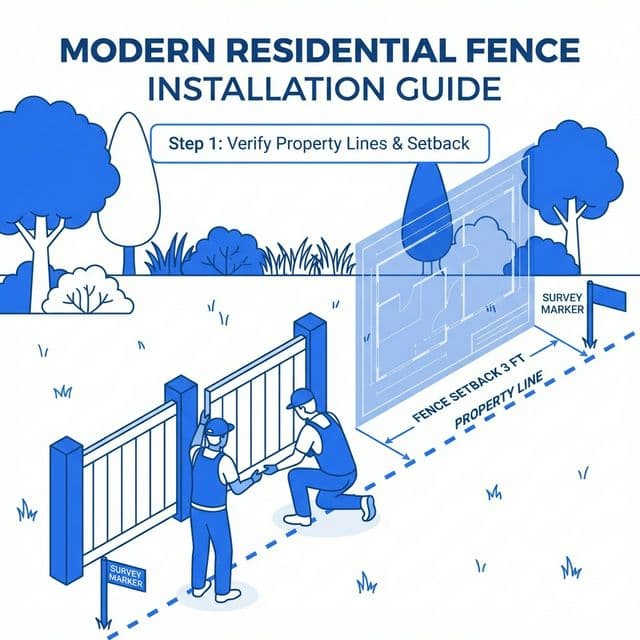
Fence Permit Rules: Height, Setbacks, and Property Lines Explained
Fence permit rules vary widely by city, but the same handful of factors—height, yard location, setbacks, corner-lot sightlines, and your true property line—decide nearly every case. Here's how to read them for your lot.