
How to Estimate the Cost of a Home Addition
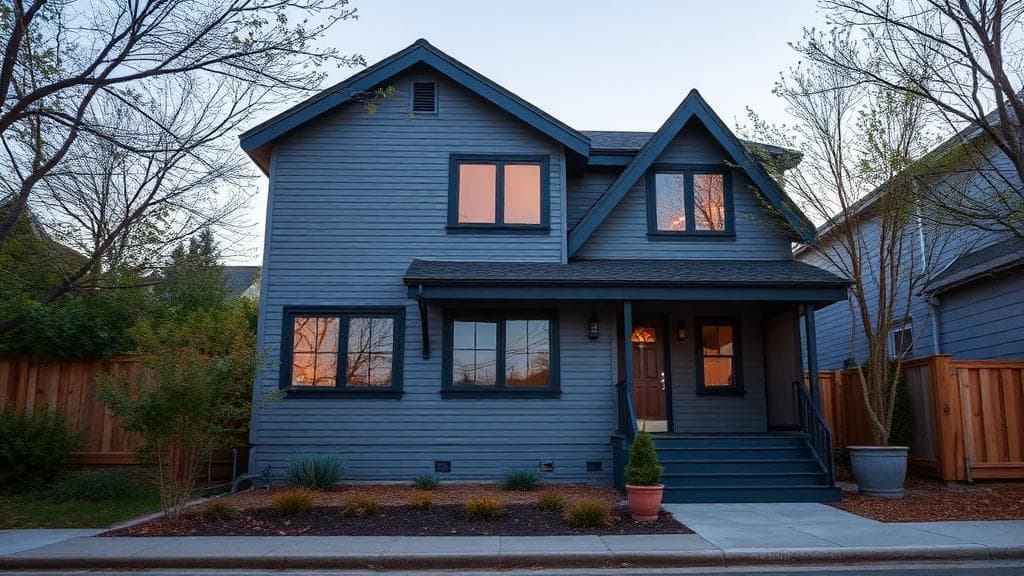
Direct Answer: The cost to build a home addition usually runs roughly $80 to $200 per square foot for single-story space and $100 to $300+ per square foot for second-story additions, which means a typical project often lands somewhere around $22,000 to $83,000, with a national average near $51,000 (HomeAdvisor, 2025). Your real number depends on local variables — addition size, foundation type, whether it includes a bathroom or kitchen, utility and HVAC upgrades, your region's labor rates, and local permit, design, and zoning costs. Treat any per-square-foot figure as a starting bracket, then adjust for your property, your zoning district, and your scope before you trust it.
Key Takeaways
- The cost to build a home addition is best estimated as a range per square foot first, then refined line-by-line — not as a single number you copy from a calculator.
- Single-story additions commonly run $80–$200/sq ft; second-story additions run $100–$300/sq ft because of structural reinforcement and harder access (HomeAdvisor, 2025).
- Bathrooms and kitchens are typically the most expensive rooms per square foot because of plumbing, electrical, ventilation, and finishes — a small bathroom addition can cost as much as a much larger bedroom.
- Design and permit fees are real line items, not rounding error: architects commonly charge 5–20% and general contractors 10–20% of project cost (HomeAdvisor, 2025).
- Foundation type, utility upgrades, and HVAC capacity are the three "hidden" cost drivers that wreck naive estimates — a slab is usually cheaper than a full basement, and an addition can force a panel, water-heater, or furnace upgrade.
- Always budget a 10–20% contingency; older homes and additions that tie into existing structures routinely surface surprises once walls open.
- Local rules change the answer. Zoning setbacks, impervious-surface caps, floodplain/shoreland overlays, and permit-fee schedules vary by municipality and can add cost or block a footprint entirely.
On This Page
Jump to any section of this guide:
- What "Estimating a Home Addition" Actually Means
- The Cost Layers, One at a Time
- Local Variables That Change the Answer
- A Quick Comparison: Single-Story vs. Second-Story Additions
- Documents and Facts to Gather Before You Estimate
- Common Mistakes
- Example Scenarios
- Practical Checklist
- Definitions
- Why Local Rules Change the Answer
- A Local Example: Sturgeon Bay, Door County, Wisconsin
- How GovCodex Helps
- Frequently Asked Questions
What "Estimating a Home Addition" Actually Means
When people ask about the cost to build a home addition, they usually want a single number. The honest answer is that an addition cost is a stack of estimates: a base construction cost (driven by square footage and finish level), plus foundation, plus mechanical/electrical/plumbing (MEP), plus design and permit fees, plus a contingency. A good estimate isn't one figure — it's a defensible range built from those layers.
In plain English: you start with a per-square-foot bracket, multiply by your planned size, then add or subtract for the things that make your addition unlike the "average" one — a second story, a new bathroom, a soil problem, a tight lot, a flood overlay, or a panel that's already maxed out.
Why getting this right matters
A bad estimate doesn't just cost money — it can stall a project halfway. Homeowners who budget only the construction number, then get blindsided by a several-thousand-dollar permit-and-plan-review bill, a required HVAC upgrade, or a zoning variance application, often run out of money before drywall. Lenders, contractors, and your own decision to build versus move all depend on an estimate that already includes the unglamorous line items. Estimating well is also how you spot a deal-breaker early: if your lot's impervious surface coverage is already near the cap, a big slab addition might not be legal at any price.
When a per-square-foot estimate usually applies
Per-square-foot brackets work best for conventional additions: a bump-out, a bedroom, a family room, a primary suite, or a second-story add over an existing footprint. They assume normal soil, accessible site conditions, standard ceiling heights, and mid-grade finishes.
When the simple estimate breaks down
The bracket becomes unreliable when your project includes one of the cost amplifiers: a kitchen or bathroom (MEP-heavy), a second story (structural + access), a difficult foundation (basement, deep frost footings, poor soil), a utility upgrade (electrical panel, water/sewer capacity, well/septic), or a regulatory complication (variance, floodplain, historic overlay). In those cases you estimate each component separately and only then convert back to a blended per-square-foot figure for sanity-checking.
The Cost Layers, One at a Time
1. Size and base construction cost
Size is the single biggest lever. Using 2025 national data, single-story additions generally run $80–$200 per square foot including labor and materials, and second-story additions $100–$300 per square foot (HomeAdvisor, 2025). A 400 sq ft single-story family room at $150/sq ft is roughly $60,000 in base construction before the extras below.
Finish level swings the bracket: builder-grade flooring, stock cabinets, and basic trim sit at the low end; custom millwork, tile, and high-end windows push toward the top. Your region matters too — labor and materials in a high-cost metro can run well above the national midpoint, while rural markets may sit lower.
2. Foundation type
The way your addition meets the ground is a major cost fork:
| Foundation type | Relative cost | When it's used |
|---|---|---|
| Slab-on-grade | Lowest | Warm-ish climates, single-story, no basement desired |
| Crawlspace | Moderate | Access to plumbing/HVAC, sloped lots |
| Frost-protected footings | Moderate | Cold climates (see frost-depth rules) |
| Full basement | Highest | Cold climates, extra usable space, where excavation is feasible |
In cold-winter regions, footings typically must reach below the frost line, which adds excavation and concrete — the same principle that governs deck footings and frost depth. Poor soil, high water tables, or ledge rock can add thousands you can't see from the curb, and excavation alone can run anywhere from roughly $1,500 to $10,000 depending on conditions (HomeAdvisor, 2025).
3. Stories and structural work
A second-story addition usually costs more per square foot than ground-level space because the existing structure may need reinforced framing, footings, or a new beam to carry the load, and because crews work at height with harder material access. Removing and rebuilding a roof also exposes you to weather risk during construction. Expect a meaningful premium over a comparable single-story addition; per-square-foot figures for second-story work commonly start where single-story work tops out and climb from there.
4. Bathrooms and kitchens
This is where per-square-foot averages tend to mislead people. A bathroom or kitchen addition packs plumbing supply and drain lines, electrical circuits, exhaust ventilation, waterproofing, and expensive fixtures into a small area. National data puts a bathroom addition near ~$35,000 and a kitchen addition near ~$55,000 as typical figures (HomeAdvisor, 2025) — and a small wet room can cost as much per square foot as a much larger dry room. If your addition is "habitable, plumbed, and wired," budget accordingly.
5. Labor vs. materials
Labor is a large share of any addition, and trade rates vary regionally. Electricians often bill around $50–$130/hour, plumbers around $45–$150/hour, and structural engineers around $70–$250/hour (HomeAdvisor, 2025). This is why "I'll buy the materials myself to save money" usually moves the needle less than people expect — the people installing them are a large part of the bill.
6. Design and permit fees
These are real, and they're often underestimated:
- Architect: roughly 5–20% of project cost for full design (HomeAdvisor, 2025).
- General contractor: roughly 10–20% of project cost as overhead/profit (HomeAdvisor, 2025).
- Construction manager (if used): roughly 5–15% (HomeAdvisor, 2025).
- Building permit fees: vary widely by jurisdiction and are usually based on project valuation or square footage — frequently in the low hundreds to a few thousand dollars (HomeAdvisor, 2025). See our breakdown of how much a building permit costs.
You may also need engineered drawings, a survey, or a site plan, each with its own fee.
7. Utility upgrades and HVAC impact
Additions frequently force utility upgrades that have nothing to do with the new room's finishes:
- Electrical: A new wing of receptacles, lighting, and appliances can exceed your existing panel's capacity, triggering a panel or service upgrade.
- Plumbing/sewer: New fixtures may require larger supply lines or affect septic sizing.
- HVAC: Adding conditioned square footage increases heating and cooling load. Your existing furnace or air handler may be undersized, requiring a larger unit, a mini-split, or extended ductwork. HVAC impact is one of the most common "we forgot about that" costs.
8. Contingency
Always carry a 10–20% contingency. Additions tie into existing construction, and once you open walls, floors, or the roof, you discover the actual condition of framing, wiring, and insulation. Older homes carry more risk. A contingency isn't padding — it's the difference between finishing and stalling.
Local Variables That Change the Answer
Two identical floor plans on two different lots can have very different real costs because of where they sit. The big local variables:
- Region/state/county labor and material pricing. A high-cost metro can run far above the national midpoint.
- Zoning district and setbacks. If your addition crosses a setback line, you may need a zoning variance — which adds application fees, time, and uncertainty.
- Lot coverage and impervious-surface caps. A footprint expansion can exceed limits.
- Overlays: floodplain, shoreland, or historic-district rules can require elevation, special materials, or extra review.
- Permit-fee schedules and plan-review fees, which differ by municipality.
- Utility/site conditions: well/septic vs. municipal sewer, soil, slope, access.
A Quick Comparison: Single-Story vs. Second-Story Additions
Use this table to sanity-check which direction makes sense before you commit to a design. The cost ranges are national starting brackets — confirm against local quotes.
| Factor | Single-story (build out) | Second-story (build up) |
|---|---|---|
| Typical cost per sq ft | $80–$200 (HomeAdvisor, 2025) | $100–$300 (HomeAdvisor, 2025) |
| Foundation work | New footings/slab required | Reinforces existing footings; may need new beams |
| Lot impact | Consumes yard area; can hit setbacks/coverage | Preserves yard; no new footprint |
| Structural risk | Lower | Higher (load path through existing walls) |
| Disruption | Moderate | High (roof removal, weather exposure) |
| Common limiter | Setbacks, impervious cap | Existing structure capacity, height limit |
The "cheaper" option is property-specific: building out is usually cheaper per square foot, but if your lot is near a coverage or setback limit, building up may be the only legal path.
Documents and Facts to Gather Before You Estimate
- Your parcel ID and lot dimensions (from the county GIS or assessor).
- Your zoning district and the applicable setback and coverage table.
- A recent survey or plat, if you have one.
- The municipal permit-fee schedule and application forms — see our permit application checklist.
- Your home's electrical panel size and HVAC capacity.
- Whether your lot is in a floodplain, shoreland, or historic overlay.
- 2–3 contractor quotes once you have a defined scope.
Common Mistakes
- Quoting only the base construction number and forgetting design, permit, utility, and contingency layers.
- Using one per-square-foot figure for an addition that contains a kitchen or bath.
- Ignoring foundation and soil — the cheapest-looking lot can hide the most expensive footing.
- Assuming the existing panel/furnace can carry the new load.
- Skipping the zoning check until after design — discovering a setback or coverage problem late is expensive.
- Carrying no contingency.
- Confusing "permit required?" with "permit cost" — these are different questions; see building vs. zoning vs. electrical vs. plumbing permits.
Example Scenarios
These are illustrative arithmetic using national brackets, not quotes — your local numbers will differ.
Scenario A — 200 sq ft bump-out, no plumbing. At $90–$160/sq ft, base construction is roughly $18,000–$32,000. Add ~10% design/permit and a 15% contingency, and you're realistically in the mid-$20,000s to high-$30,000s.
Scenario B — 350 sq ft primary suite with a full bath. Base construction at $140–$200/sq ft is ~$49,000–$70,000, plus the bathroom's plumbing and ventilation push the wet-room portion higher. With design, permit, and contingency, plan for ~$65,000–$95,000+.
Scenario C — 600 sq ft second-story addition. At $120–$300/sq ft for second-story work, base construction alone could be $72,000–$180,000, before structural reinforcement of the floor below, a likely HVAC upgrade, and design fees.
Practical Checklist
- Define the scope and rough square footage.
- Pick a per-square-foot bracket (single vs. second story; finish level).
- Multiply for base construction cost.
- Add foundation based on type and soil.
- Add kitchen/bath premiums if applicable.
- Add utility and HVAC upgrades.
- Add design + permit fees (use real percentages and your local fee schedule).
- Add a 10–20% contingency.
- Check zoning (setbacks, coverage, overlays) before finalizing.
- Get 2–3 contractor quotes and reconcile against your stacked estimate.
Definitions
- Cost per square foot: Total project cost divided by added floor area; a blended figure that hides component variation.
- Base construction cost: The structural shell plus standard finishes, before MEP upgrades, design, and permit fees.
- MEP: Mechanical, electrical, and plumbing — the systems that make a kitchen or bath expensive.
- Foundation type: Slab, crawlspace, frost-protected footing, or full basement; a major cost fork.
- Frost line: The depth to which ground freezes; footings in cold climates typically must extend below it.
- Setback: The minimum distance a structure must sit from a lot line.
- Impervious surface coverage: The share of a lot covered by roof, pavement, or other water-shedding surfaces, often capped by ordinance.
- Contingency: A reserve (commonly 10–20%) for unforeseen conditions.
- Plan review fee: A municipal charge to review submitted drawings, often separate from the permit fee.
- Valuation-based permit fee: A permit fee calculated as a function of the project's stated construction value.
Why Local Rules Change the Answer
The same addition can cost different amounts — and is sometimes not buildable as drawn — depending on a stack of local rules. Here is exactly what to check rather than guessing:
- Municipality vs. county jurisdiction. Whether the city or the county issues your permit usually determines the fee schedule and the application form. Check the building/zoning department page for your address.
- State building code adoption. Most states adopt a version of the IRC/IBC; Wisconsin enforces its Uniform Dwelling Code (SPS 320–325) for one- and two-family dwellings. The code edition affects structural, energy, and inspection requirements.
- Zoning district + dimensional table. Your district's setbacks, height limit, lot coverage, and minimum lot area typically come from the zoning ordinance's dimensional table. Find your district on the official zoning map, then read the matching row.
- Overlays. Floodplain (check the FEMA Flood Map / FIRM and any local floodplain chapter), shoreland/wetland (in Wisconsin, often via county shoreland ordinance and state DNR rules), and historic-district overlays each can add requirements.
- Parcel boundaries and easements. Pull your parcel from the county GIS/parcel viewer and your survey/plat to locate easements that may block a footprint.
- Project size/height/use/method. Whether the addition is attached, structural, habitable, wired, plumbed, or heated typically determines which permit types apply — building, electrical, plumbing, and/or zoning.
Name the documents: the zoning ordinance dimensional table, the official zoning map, the municipal permit-fee schedule, the building-permit application, the FEMA FIRM, and your parcel record/survey. Only contact the building office directly when those documents leave a genuine ambiguity (for example, an unclear overlay boundary or a discretionary setback).
A Local Example: Sturgeon Bay, Door County, Wisconsin
This separates the general rule (estimate in layers) from local specifics verified against official sources. Always confirm against the live documents — values can change.
Permits and who issues them. The City of Sturgeon Bay requires zoning approval for all new buildings, additions to existing buildings, and new uses within existing buildings (City Zoning page). Building code administration and inspections for the city are provided by Inspection Specialists, LLC, with offices at City Hall, 421 Michigan Street (City Building Inspection page). The city states that any structure less than 100 square feet is considered outdoor storage and does not require a building permit — but a habitable addition is well above that threshold and will, in the typical case, require both zoning approval and a Wisconsin Uniform Dwelling Code (UDC) building permit.
Zoning dimensions that shape the footprint. Sturgeon Bay's residential setbacks (front/street yard, side yard, rear yard) and its maximum height and lot-coverage limits come from the Chapter 20 zoning dimensional table. The exact per-district numbers (for example, R-1 vs. R-2/R-3 front and side yards) and any citywide impervious-surface cap should be read directly from the current Chapter 20 text in Municode for your specific district — the precise figures and section numbers are needs_research here because the live ordinance text could not be independently re-verified at publication and these values are periodically amended. Whatever the exact figures, setbacks and any impervious-surface limit can constrain how large an addition's footprint may be — if your lot is near a coverage limit, that is a cost-and-feasibility issue before you price a single stud.
Local fee figures (specifics). The exact building-permit and plan-review fee schedule for an addition is published in the city's Fee Schedule (April 2025 version) on the Building Inspection page; the precise per-project dollar amount for a residential addition is needs_research here because it depends on project valuation/scope in that schedule. For reference, the city does publish that it requires a permit for fences built after 2021 and that the fence permit fee is $50 (City Zoning page) — a reminder that even small ancillary work carries its own fee.
Overlays to check for a Door County waterfront lot. Door County's extensive shoreline means many parcels can fall under shoreland-zoning and possibly floodplain rules; confirm via the county GIS/parcel viewer, the FEMA FIRM, and applicable shoreland provisions before assuming a lakeside addition can extend toward the water. Specific shoreland setbacks for a given parcel are needs_research without the parcel ID.
Net: in Sturgeon Bay, the estimating method is identical to anywhere — but the Chapter 20 zoning dimensions, the UDC building permit, and the city's April 2025 fee schedule are the local levers that turn a generic per-square-foot number into a real budget.
How GovCodex Helps
Estimating an addition well means combining construction math with local-rule reality — and that's exactly the seam GovCodex sits in. It is a local-code-aware planning and permitting assistant, not a generic chatbot. Here is how it supports an addition estimate from "I want to build this" to "I understand the rules, risks, documents, and next steps for my property":
- Identifies permit triggers for your specific scope — distinguishing when zoning approval, a UDC/building permit, and electrical or plumbing permits each apply.
- Interprets local code by pulling the relevant ordinance sections (setbacks, height, lot coverage, impervious caps) for your district and citing them.
- Gathers the facts that drive cost — parcel dimensions, zoning district, overlays — using parcel/GIS context.
- Lets you upload a survey, site photo, or permit PDF and analyzes it against the rules.
- Builds a permit-readiness checklist so design and permit fees don't surprise you mid-project.
- Drafts project descriptions and site-plan notes you can reuse on applications.
- Compares options — slab vs. basement, single vs. second story, attached vs. detached — against both cost and code.
- Flags missing information and clearly separates verified facts from assumptions, so your estimate is honest about what still needs confirmation.
- Finds the right application and outlines localized next steps, with human-in-the-loop review where required.
Describe your project, upload any site documents or photos you already have, and GovCodex can help organize the rules, documents, and next steps for your property.
Frequently Asked Questions
How much does it cost to build a home addition?
Most home additions cost between $22,000 and $83,000, with a national average around $51,000 (HomeAdvisor, 2025). Per square foot, single-story additions typically run $80–$200 and second-story additions $100–$300+. Your real number depends on size, finishes, foundation, MEP work, and local fees.
What is the cost per square foot for a home addition?
Single-story additions usually run $80–$200 per square foot including labor and materials, while second-story additions run $100–$300 per square foot because of structural and access challenges (HomeAdvisor, 2025). Kitchens and bathrooms typically cost more per square foot than dry rooms.
Why are bathroom and kitchen additions so expensive?
They concentrate plumbing, electrical, ventilation, waterproofing, and costly fixtures into a small area. National figures put a bathroom addition near ~$35,000 and a kitchen addition near ~$55,000 (HomeAdvisor, 2025), so a small wet room can cost as much as a much larger bedroom.
How much should I budget for permits and design fees?
Plan for design fees of roughly 5–20% (architect) and contractor overhead/profit of 10–20% of project cost (HomeAdvisor, 2025), plus the municipal building-permit and plan-review fees from your local fee schedule. These are real line items, not rounding error.
How big a contingency should I carry?
A 10–20% contingency is standard. Additions tie into existing construction, and opening walls, floors, or the roof often reveals conditions you couldn't price in advance. Older homes generally warrant the higher end of that range.
Does an addition require an HVAC or electrical upgrade?
Often, yes. Added conditioned space increases heating and cooling load, which can require a larger furnace, a mini-split, or extended ductwork. New circuits and appliances may exceed your existing electrical panel, triggering a panel or service upgrade. Both are common "forgotten" costs, though whether they apply depends on your existing systems.
How does foundation type affect the cost?
A slab-on-grade is typically the least expensive, a crawlspace is moderate, and a full basement is usually the most expensive due to excavation and concrete. In cold climates, footings generally must extend below the frost line, adding cost. Soil and water-table conditions can add thousands.
Do I need a permit to build a home addition?
Almost always — habitable additions typically require a building permit, and frequently zoning approval and trade (electrical/plumbing) permits, though requirements depend on your jurisdiction. In Wisconsin, additions to one- and two-family dwellings generally fall under the Uniform Dwelling Code (SPS 320–325). Check your local building/zoning department to confirm.
How much does a building permit for an addition cost?
Permit fees vary widely and are usually based on project valuation or square footage, set by each municipality's fee schedule, and are frequently in the low hundreds to a few thousand dollars (HomeAdvisor, 2025). Some jurisdictions also charge a separate plan-review fee. See our guide on how much a building permit costs and your local schedule for specifics.
Can zoning rules stop me from building the addition I want?
They can. Setbacks, height limits, lot coverage, and impervious-surface caps can constrain or block a footprint. For example, many Wisconsin municipalities (including parts of Sturgeon Bay) cap impervious surface, and Door County shoreland lots may face additional setbacks. If your design exceeds a limit, you may need a variance, which adds cost and time.
Is it cheaper to build out or build up?
Building out (single-story) is usually cheaper per square foot than building up, because second-story additions typically require structural reinforcement and harder material access. But building out consumes lot area and can run into setback or coverage limits, so the "cheaper" option depends on your lot.
How accurate are online home-addition cost calculators?
They're useful for a starting bracket but unreliable as a final number. They rarely account for your foundation, soil, utility upgrades, local permit fees, or zoning constraints. Use them to ballpark, then build a layered estimate and confirm with 2–3 contractor quotes.
Related Articles
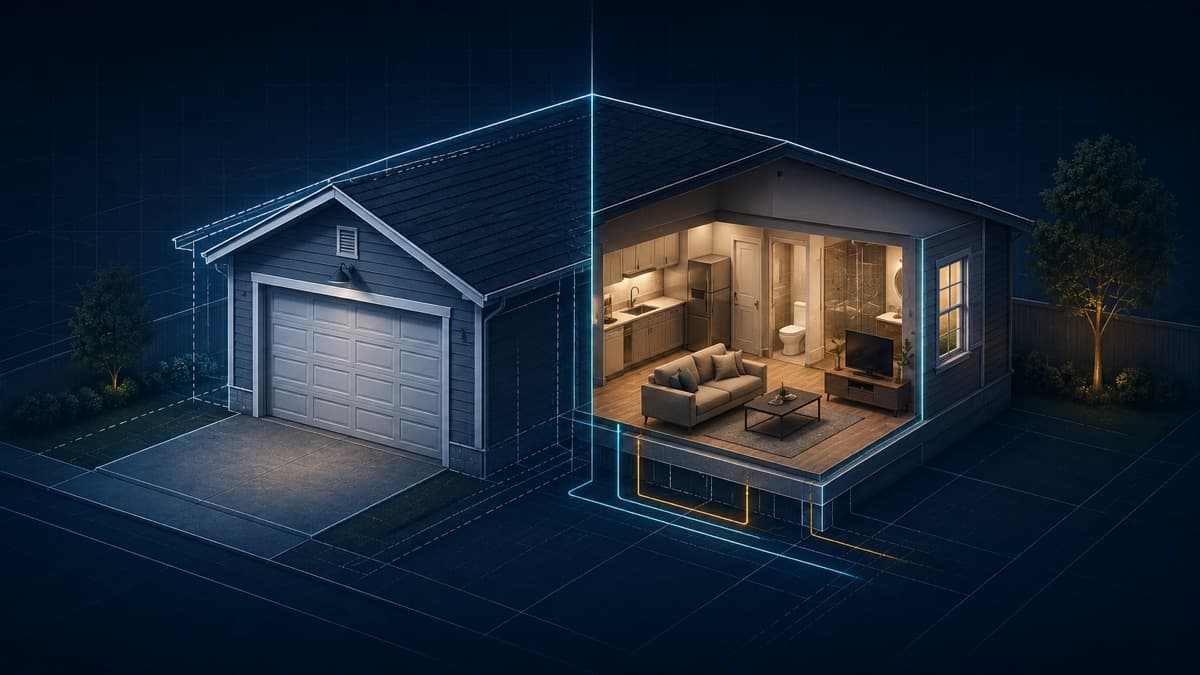
Can I Turn My Garage Into an Apartment?
Whether you can convert a garage to an apartment ADU depends on your zoning district, parking, utilities, and building-code rules like egress and fire separation. Here's how to find your real answer.
Permit Application Checklist for Home Renovations
A practical, local-code-aware building permit document checklist for home renovations — site plans, drawings, survey, structural details, and the local variables that change what your jurisdiction actually requires.
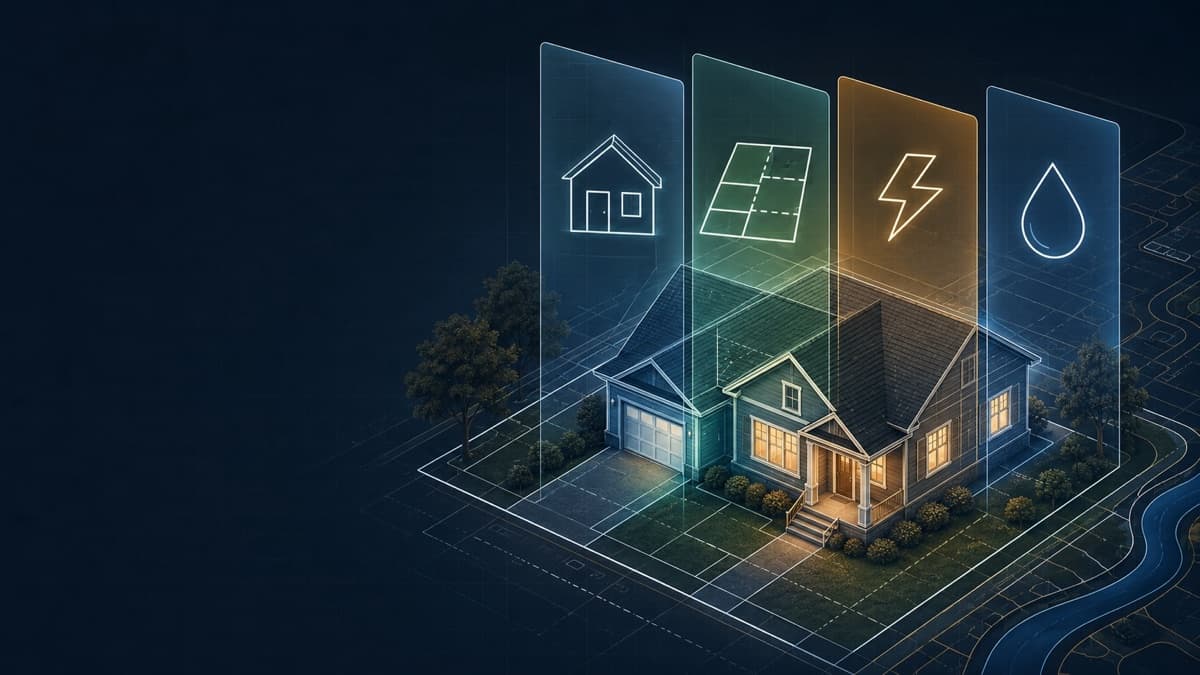
The Difference Between Building, Zoning, Electrical, and Plumbing Permits
A plain-English guide to how building, zoning, electrical, plumbing, mechanical, right-of-way, and floodplain/shoreland permits differ, who reviews each, and how they stack on one project — with a researched Sturgeon Bay, Wisconsin example.