
The Difference Between Building, Zoning, Electrical, and Plumbing Permits

Direct Answer: The phrase "building permit" is an umbrella term, but most jurisdictions actually issue several distinct approvals — and getting the types of building permits explained correctly up front is the single best way to keep a project moving. A typical project may need a zoning permit (does the project fit the land-use and dimensional rules?), a building permit (is the structure code-compliant and safe?), and separate electrical, plumbing, and mechanical (HVAC) permits for each trade, plus situational permits like right-of-way, floodplain, or shoreland approvals. Different reviewers usually handle each one — a zoning administrator, a building inspector, trade inspectors, and sometimes a county or state agency — and a single project often needs two or more at once. The exact names, triggers, fees, and who issues them depend heavily on your state's code adoption and your specific municipality, county, zoning district, and parcel conditions, so the categories below are the general framework, not a guarantee for your address.
Key Takeaways
- Types of building permits explained: the common categories are zoning, building, electrical, plumbing, mechanical/HVAC, right-of-way (ROW), and floodplain/shoreland — each answers a different question and is often reviewed by a different authority.
- A zoning permit asks "is this use and placement allowed here?" (setbacks, height, lot coverage, use), while a building permit asks "is this structurally safe and code-compliant?"
- Electrical, plumbing, and mechanical work usually need their own trade permits and inspections, even when a building permit is already open, because each trade follows its own code chapter.
- Many projects need more than one permit at the same time, and zoning approval often must come before the building permit is issued.
- Floodplain and shoreland permits are triggered by location, not project type — proximity to water or a mapped flood zone can add a review even for small work.
- Who issues each permit varies by state. In Wisconsin, for example, one- and two-family dwellings are governed by the statewide Uniform Dwelling Code (UDC), and the municipal building inspector typically administers the UDC building and trade reviews locally.
- The fastest way to avoid a stop-work order is to identify every applicable permit before you start, because missing one trade permit can hold up the whole project.
On This Page
Jump to any section of this guide:
- Plain-English Explanation: One Project, Several Permits
- Why It Matters
- When Each Permit Usually Applies
- When Exceptions May Apply
- Local Variables That Change the Answer
- Documents and Facts to Gather
- Common Mistakes
- Example Scenarios
- Practical Checklist
- People Also Ask
- Definitions
- Why Local Rules Change the Answer
- A Local Example: Sturgeon Bay, Door County, Wisconsin
- How GovCodex Helps
- Frequently Asked Questions
Plain-English Explanation: One Project, Several Permits
When people say "I pulled a permit," they often imagine a single piece of paper. In reality, most building departments split approval into layers, and understanding the types of building permits explained here will usually save you time, money, and rework. Each permit type answers a separate question:
- Zoning permit — Can I do this here, and where exactly on the lot? Reviews land use, setbacks, height, lot coverage, and overlay rules.
- Building permit — Is the structure itself safe and built to code? Reviews the framing, foundation, structural load path, egress, and life-safety items.
- Electrical permit — Is the wiring safe? Reviews circuits, panels, grounding, and outlets against the adopted electrical code.
- Plumbing permit — Is the water and waste system safe and sanitary? Reviews supply, drainage, venting, and fixtures.
- Mechanical / HVAC permit — Is the heating, cooling, and ventilation safe? Reviews furnaces, ductwork, gas lines, and combustion air.
- Right-of-way (ROW) permit — Are you working in or near the public street, sidewalk, or utility strip? Covers driveway aprons, curb cuts, sidewalk closures, and trenching in the public way.
- Floodplain / shoreland permit — Is the parcel near water or in a mapped flood zone? Adds an elevation, fill, or vegetation review on top of everything else.
The key mental model: zoning is about the land, building is about the structure, and the trade permits are about the systems inside the structure. A reviewer who confirms your deck meets the rear setback (zoning) is usually a different person from the one who confirms your footings hit frost depth (building) — and neither one typically inspects the new circuit you ran to power the hot tub (electrical). Whether all of these apply to your specific project depends on local rules, but the four-way split is a reliable starting framework almost everywhere in the United States.
Why It Matters
Treating "the permit" as one thing is one of the most common reasons projects stall. If you assume a building permit covers everything and skip the separate electrical permit, an inspector can fail the project at final inspection — even if the carpentry is flawless. If you build first and discover a zoning problem later (say, the addition crosses a setback), you may face a costly variance request, a redesign, or removal. Missing permits also tend to surface at the worst possible time: during a home sale, an insurance claim after a fire, or a refinance, when unpermitted work can stall a deal or complicate coverage. Getting the categories right up front is generally cheaper than fixing them after the concrete is poured. If you're still deciding whether a small project even crosses the line, When Does a DIY Project Become a Code Problem? is a useful companion, and Do I Need a Permit to Build a Deck? walks through a single project end to end.
When Each Permit Usually Applies
The triggers below are typical, but you should always confirm against your local code because thresholds vary by jurisdiction.
| Permit type | Core question | Usually triggered by | Common reviewer |
|---|---|---|---|
| Zoning | Is the use/placement allowed? | New structures, additions, accessory buildings, fences, use changes, decks | Zoning administrator / planning dept. |
| Building | Is the structure safe? | New construction, additions, structural alterations, decks above a size/height threshold | Building inspector / building official |
| Electrical | Is the wiring safe? | New circuits, panel upgrades, service changes, most added outlets/fixtures | Electrical inspector |
| Plumbing | Is water/waste safe? | New or moved fixtures, water heaters, supply/drain lines | Plumbing inspector |
| Mechanical (HVAC) | Is heating/cooling safe? | New furnace, AC, ductwork, gas piping, fireplaces | Mechanical inspector |
| Right-of-way | Are you in the public way? | Driveway aprons, curb cuts, sidewalk work, utility trenching | Public works / engineering / DOT |
| Floodplain / shoreland | Is the parcel near water/flood zone? | Development within a mapped floodplain or shoreland zone | Floodplain administrator / county / state agency |
A small project might trigger only one (a fence may need only a zoning permit in some towns). A kitchen remodel that moves a wall, relocates the sink, adds circuits, and reroutes a duct can trigger building, plumbing, electrical, and mechanical permits at once. The table is a map of the usual landscape, not a substitute for reading your own jurisdiction's permit-scope section.
When Exceptions May Apply
Many jurisdictions exempt genuinely minor work. Common (but not universal) exemptions may include like-for-like repairs, small sheds under a square-footage threshold, replacing a single fixture in the same spot, or cosmetic work like paint and flooring. Some places let a "homeowner of record" do their own electrical or plumbing on their primary residence without a contractor license, while others require a licensed trade for any wired or plumbed work. Importantly, exemptions almost never waive the zoning rules even when they waive the permit — a shed that needs no building permit still generally has to sit behind the setback line. Never assume an exemption applies; the threshold (square footage, valuation, height, or fixture count) is exactly the kind of local variable that changes the answer, and it should be confirmed in writing against the code text rather than from memory or a neighbor's experience.
Local Variables That Change the Answer
The same project can need different permits one town over. The variables that tend to move the answer most:
- State code adoption. States adopt their own versions of model codes (IRC, IBC, NEC, IPC/UPC, IMC) and sometimes a state-specific residential code. This sets the baseline for who issues what.
- Jurisdiction type. A city, village, town, or unincorporated county area may each run permitting differently — and counties often handle sanitary, shoreland, and floodplain programs even when a city handles building.
- Zoning district and overlays. Setbacks, height, and coverage differ by district; historic, shoreland, or design-review overlays add steps.
- Parcel conditions. Easements, the ordinary high-water mark, mapped wetlands, and lot-of-record status all can change which approvals attach.
- Project size, height, use, and method. Whether the work is attached, structural, habitable, wired, plumbed, or heated determines which trade permits engage.
- Location relative to water and flood maps. Floodplain and shoreland reviews are location-driven, not project-driven.
To learn how to pin these down for your own lot, see How to Find Your Local Building Code Without Getting Lost and How to Read a Zoning Map Before You Build.
Documents and Facts to Gather
Before you apply for any of these permits, it helps to assemble a fact base. The same packet usually serves multiple permit types:
- Parcel ID / tax parcel number and the property's legal address.
- Zoning district and any overlays (from your municipal zoning map).
- A site plan showing lot lines, existing structures, the proposed work, and dimensions to each property line.
- A survey if you have one — it tends to resolve setback disputes fast.
- Scope description for each trade: how many new circuits, which fixtures move, what HVAC equipment.
- Structural details for building review: footing depth, span tables, beam sizes.
- Flood/shoreland status: distance to the nearest waterbody and whether the parcel touches a mapped flood zone.
- Contractor license info if a licensed trade is required.
A complete packet is often the difference between same-week approval and weeks of back-and-forth; the Permit Application Checklist for Home Renovations breaks this down item by item.
Common Mistakes
- Assuming "building permit" covers the trades. Electrical, plumbing, and HVAC are usually separate.
- Building before zoning sign-off. Zoning approval often gates the building permit; reversing the order risks a redesign.
- Ignoring the public right-of-way. A new driveway apron or sidewalk cut can need a separate ROW permit from public works or the DOT.
- Overlooking location-based reviews. A small project near a lake or in a flood zone can trigger a shoreland or floodplain permit the owner never anticipated.
- Misreading exemptions. A permit exemption is generally not a code exemption — setbacks and safety rules typically still apply.
- Pulling the wrong number of inspections. Each trade permit typically carries its own rough-in and final inspection.
Example Scenarios
Scenario 1 — New detached garage. Likely needs a zoning permit (setbacks, accessory-building size and height limits, lot coverage), a building permit (foundation, framing), and an electrical permit (lights and outlets). If you add a sink, a plumbing permit too. See Can I Build a Garage or Shed in My Backyard?.
Scenario 2 — Replacing an electrical panel. Often just an electrical permit with its own inspection; commonly no zoning involvement because nothing moves on the lot.
Scenario 3 — Bathroom addition on a lakefront lot. Could need zoning, building, plumbing, electrical, mechanical, and a shoreland review if the parcel sits within the shoreland zone — six layers on one bathroom.
Scenario 4 — New driveway to a town road. May need a right-of-way / driveway permit for the culvert and apron in addition to any zoning permit.
Practical Checklist
- Write a one-paragraph scope of work.
- Look up your zoning district and confirm setbacks, height, and coverage.
- List every trade the project touches (structural, electrical, plumbing, mechanical).
- Check location triggers: floodplain map and shoreland distance.
- Check ROW triggers: any work in or near the public street/sidewalk?
- Identify who issues each permit (city, county, state).
- Confirm exemption thresholds in writing from the code, not memory.
- Assemble the shared document packet (parcel ID, site plan, scope).
- Sequence the applications — usually zoning first, then building, then trades.
- Note the inspections each permit requires so nothing fails at final.
People Also Ask
- Is a zoning permit the same as a building permit? No — zoning is generally about land use and placement; building is about structural safety.
- Do I need a separate electrical permit if I have a building permit? Usually yes; trades are typically permitted separately.
- Who issues electrical and plumbing permits? Often a trade inspector within the local building department, but it varies by state.
- What is a mechanical permit? A permit for HVAC, ductwork, and gas-fired equipment.
Definitions
- Zoning permit: Approval confirming a project's use and placement comply with the local zoning ordinance (setbacks, height, coverage, use).
- Building permit: Approval confirming a structure meets the adopted building/residential code for safety and construction.
- Electrical permit: Approval and inspection authority for wiring, panels, and circuits under the adopted electrical code.
- Plumbing permit: Approval for water supply, drainage, venting, and fixtures under the adopted plumbing code.
- Mechanical (HVAC) permit: Approval for heating, cooling, ventilation, ductwork, and fuel-gas piping.
- Right-of-way (ROW) permit: Authorization to work within the public street, sidewalk, or utility strip.
- Floodplain development permit: A location-based approval for development inside a mapped flood zone.
- Shoreland zoning permit: A location-based approval for work within a regulated distance of lakes, rivers, or streams.
- Setback: The minimum required distance between a structure and a lot line; see What Is a Setback and Why Does It Matter?.
- Code adoption: The process by which a state or locality enacts a specific edition of a model code as law.
Why Local Rules Change the Answer
There is no single national permit system, so "do I need an electrical permit?" genuinely has different correct answers in different places. The answer is set by a stack of documents you can actually read rather than guess at:
- State code adoption decides the baseline. Look up your state's residential or building code statute and which model codes (IRC, NEC, IPC/UPC, IMC) it adopts.
- Municipal ordinance decides local administration. Find the zoning chapter for setbacks/coverage and the building/construction chapter for permit scope and exemptions.
- Zoning district and overlay decide dimensional limits. Use the official zoning map to find your district, then the district's dimensional standards table.
- Parcel boundaries and easements decide where you can build. A survey or the county GIS/parcel viewer resolves this.
- Shoreline, wetland, floodplain, and historic layers decide extra reviews. Check the FEMA Flood Insurance Rate Map (FIRM) panel, the state wetland inventory, and any shoreland ordinance.
- Project attributes decide which trade permits engage — whether the work is attached, structural, habitable, wired, plumbed, or heated, and whether it crosses size/height/valuation thresholds in the fee schedule and permit-scope section.
So rather than starting with "call your local government," read these named artifacts first: the zoning ordinance dimensional table, the building-permit scope section, the fee schedule, the zoning map, the FIRM panel, and your parcel survey. Contact the office mainly to confirm an ambiguous threshold or a discretionary review. For a deeper walkthrough, The Homeowner's Guide to Zoning Variances explains what happens when a project can't meet the rules as written, and How Much Does a Building Permit Cost? explains how the fee schedule itself is structured.
A Local Example: Sturgeon Bay, Door County, Wisconsin
Sturgeon Bay is a useful worked example because it shows how the general framework maps onto a real Wisconsin city. General rule first: the categories above (zoning, building, electrical, plumbing, mechanical, ROW, floodplain/shoreland) all exist here, but Wisconsin layers a statewide code on top, which changes who issues several of them.
For one- and two-family dwellings, Wisconsin enforces the statewide Uniform Dwelling Code (UDC), administered under Wis. Admin. Code chs. SPS 320–325. Chapter SPS 320 states its purpose as establishing "uniform statewide construction standards and inspection procedures for one- and 2-family dwellings," and it provides for permits (SPS 320.09) and inspections (SPS 320.10), with municipalities administering the program through certified inspectors. Plumbing for those dwellings is governed under the UDC's plumbing provisions (ch. SPS 325, which references the broader Wisconsin plumbing code, chs. SPS 382–387). So in Wisconsin, the building and trade reviews for a house generally ride on the UDC framework rather than a purely local building code.
Local specifics (verified against the city zoning page and the city ordinance):
- Zoning is governed by City of Sturgeon Bay Municipal Code Chapter 20. The city's Community Development page draws a clean line: "The zoning code regulates where a building can be constructed and what uses are allowed... The building code regulates how the building is constructed based upon its use." Per that page, any structure less than 100 square feet is considered outdoor storage and does not require a building permit (
source: city zoning page). As a general principle of zoning law, even a permit-exempt structure must still respect setbacks and coverage limits, though the precise application to a tiny structure should be confirmed with the zoning administrator. - Two contacts, two roles. The city lists a Planner/Zoning Administrator for zoning questions and a contracted Building Inspector for building-code matters — a real-world illustration of the zoning-versus-building split.
- Dimensional rules live in the s. 20.27 table; accessory-building limits in s. 20.29; and a State Highway 42/57 setback corridor in s. 20.34 (
source: city ordinance, Ch. 20). The specific R-1 setback figures and the citywide impervious-surface cap are governed by these sections — see What Is Impervious Surface Coverage? for why coverage caps matter. - Fences: the city confirms a $50 fence permit for fences built after 2021 (
source: city zoning page); the broader rules are covered in Fence Permit Rules: Height, Setbacks, and Property Lines. - Door County role: in Wisconsin, counties commonly administer shoreland zoning (state minimums in NR 115, which defines shoreland as within 1,000 ft of a lake/pond/flowage and 300 ft of a river/stream or to the floodplain) and floodplain programs (NR 116), plus county-level sanitary/private onsite wastewater permits. Note that NR 115's county mandate centers on unincorporated areas; an incorporated city like Sturgeon Bay may administer its own shoreland and floodplain zoning. The precise division of duties between the City of Sturgeon Bay and Door County for a specific parcel — and the city's electrical, plumbing, and mechanical permit fees — is
needs_researchand should be confirmed against the city building inspector and the county land-use office. - Exact UDC permit fee dollar amounts for Sturgeon Bay are
not_available_from_current_sources; the zoning ordinance does not codify dollar fees (they are typically set by resolution).
This separation — general UDC framework, verified local citations, and clearly-flagged unknowns — is exactly how you should reason about any address.
How GovCodex Helps
GovCodex is built to turn "I want to build this" into a clear map of the rules, documents, and next steps for your property — not a generic checklist. It identifies which permit triggers are likely to apply to your scope (zoning, building, and each trade), interprets the relevant local code sections with citations, and pulls parcel/GIS context so setbacks, overlays, and shoreland or floodplain proximity are part of the analysis from the start.
You can upload a survey, site photo, or a permit PDF, and GovCodex will read it, extract the facts that matter, and fold them into a permit-readiness checklist tailored to your project. It helps you draft scope descriptions and site-plan notes, compare options (for instance, resizing an accessory building to stay under a permit threshold), and flag missing information before you submit. Throughout, it keeps facts separate from assumptions — when a local value isn't verifiable, it says so rather than inventing one — and routes genuinely discretionary calls to human-in-the-loop review. When you're ready, it helps you find the right application form and lays out localized next steps for the correct authority.
Describe your project, upload any site documents or photos you already have, and GovCodex can help organize the rules, documents, and next steps for your property.
Frequently Asked Questions
Is a zoning permit the same as a building permit?
No. A zoning permit confirms that your project's use and placement comply with the zoning ordinance — setbacks, height, lot coverage, and allowed use. A building permit confirms that the structure itself meets the adopted building or residential code for safety. Many projects need both, and zoning approval often has to come first.
Do I need a separate electrical permit if I already have a building permit?
Usually yes. Electrical work is typically permitted and inspected separately from the building permit because it follows its own code chapter. The same is generally true for plumbing and mechanical (HVAC) work. Confirm the exact split with your local building department, since a few jurisdictions combine them.
Who issues electrical and plumbing permits?
It depends on your state and municipality. In many places a trade inspector inside the local building department issues and inspects them. In Wisconsin, electrical and plumbing work on one- and two-family dwellings falls under the statewide Uniform Dwelling Code, typically administered locally by the municipal building inspector.
What is a mechanical permit?
A mechanical permit covers heating, ventilation, and air-conditioning (HVAC) work — furnaces, air conditioners, ductwork, and fuel-gas piping. It exists to verify combustion safety, proper venting, and code-compliant equipment. Replacing a furnace or adding ductwork commonly requires one, though thresholds vary locally.
Can one project need multiple permits at once?
Yes, and many do. A kitchen remodel that moves a wall, relocates the sink, adds circuits, and reroutes a duct can trigger building, plumbing, electrical, and mechanical permits simultaneously. Each typically carries its own inspections.
What is a right-of-way permit and when do I need one?
A right-of-way (ROW) permit authorizes work in or near the public street, sidewalk, or utility strip — driveway aprons, curb cuts, sidewalk closures, or trenching. You usually need one when your project touches the public way, even if the building itself is on private land. It's commonly issued by public works, engineering, or sometimes the state DOT.
Does being near a lake or river change which permits I need?
Often, yes. Work within a regulated distance of lakes, rivers, or streams can trigger a shoreland zoning review, and work in a mapped flood zone can trigger a floodplain development permit. In Wisconsin these stem from state standards (NR 115 for shoreland, NR 116 for floodplain) and are commonly administered at the county level, though incorporated cities may run their own programs.
Do permit exemptions mean I can ignore zoning?
No. A permit exemption (for example, a very small shed) generally waives the permit, not the underlying zoning rules. The structure still typically has to respect setbacks, height limits, and coverage caps. Build outside those lines and you can be forced to move or remove it even though no permit was required.
In what order should I apply for permits?
A common sequence is zoning approval first, then the building permit, then the trade permits (electrical, plumbing, mechanical), with location-based reviews (floodplain/shoreland) resolved early because they can reshape the design. Confirm the order with your jurisdiction, since some accept combined applications.
How do I find out which permits my specific project needs?
Start with named documents: your zoning district's dimensional table, the building-permit scope section of your municipal code, the fee schedule, the zoning map, the FEMA flood map, and your parcel survey. These tell you most of the answer before you contact anyone. GovCodex can read these for your address and help assemble the list for you.
Is a mechanical or HVAC permit really needed just to swap a furnace?
In many jurisdictions, yes — a like-for-like furnace or AC change-out commonly still requires a mechanical permit and a final inspection because it involves combustion, venting, and sometimes gas piping. A handful of places exempt direct replacements. Check your local mechanical-permit scope section before assuming a swap is exempt.
Related Articles

Can I Turn My Garage Into an Apartment?
Whether you can convert a garage to an apartment ADU depends on your zoning district, parking, utilities, and building-code rules like egress and fire separation. Here's how to find your real answer.
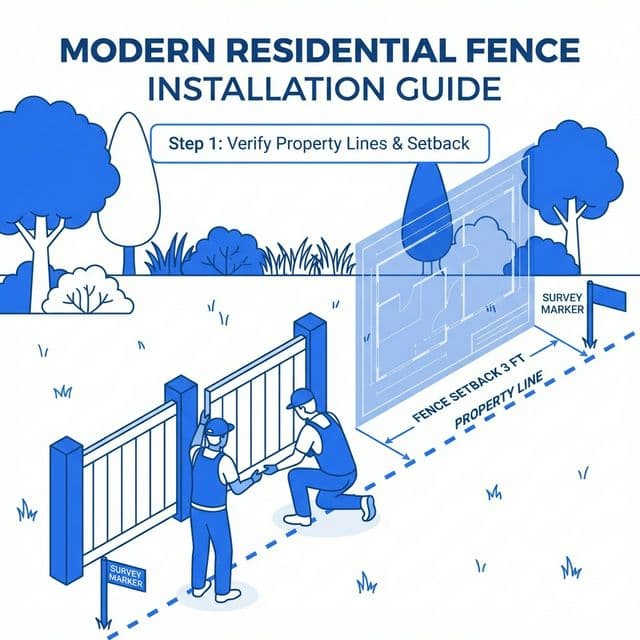
Fence Permit Rules: Height, Setbacks, and Property Lines Explained
Fence permit rules vary widely by city, but the same handful of factors—height, yard location, setbacks, corner-lot sightlines, and your true property line—decide nearly every case. Here's how to read them for your lot.

Permit Application Checklist for Home Renovations
A practical, local-code-aware building permit document checklist for home renovations — site plans, drawings, survey, structural details, and the local variables that change what your jurisdiction actually requires.