
Permit Application Checklist for Home Renovations

Direct Answer: A building permit document checklist for a home renovation usually includes a completed application, a site plan or survey showing your property and the proposed work, scaled drawings (floor plans and elevations), structural or engineering details for anything that changes the structure, a project cost estimate, and contractor license or owner-builder information. The exact list — and whether a permit is required at all — depends on your municipality, your zoning district, the type and size of work, and overlays such as shoreland or floodplain, so always confirm against your local building and zoning ordinance and the application form for your jurisdiction.
Key Takeaways
- A building permit document checklist almost always starts with the application form, a site plan or survey, and scaled construction drawings; everything else depends on the scope of work.
- Cosmetic work (paint, flooring, trim) often needs no permit, but structural, electrical, plumbing, mechanical, and footprint-changing work usually does — the threshold is set by local code, not a national standard.
- In Wisconsin, one- and two-family dwellings are governed statewide by the Uniform Dwelling Code (UDC), but the permit is issued and inspected by your local building inspector.
- Owner-builders can often pull their own permit for their primary residence, but eligibility, affidavits, and re-sale restrictions vary by jurisdiction.
- Properties near water, in floodplains, or in historic districts typically trigger extra documents and reviews on top of the standard checklist.
- The most common cause of permit rejection is an incomplete or unscaled site plan, followed by missing structural details and a missing or lowballed cost estimate.
- Gathering the right facts — parcel ID, zoning district, setbacks, and overlays — before you fill out the form saves the most time and avoids the most rework.
On This Page
Jump to any section of this guide:
- What a Building Permit Document Checklist Actually Is
- Local Variables That Change the Answer
- Documents and Facts to Gather
- Comparing Document Packages by Project Type
- Common Mistakes
- Example Scenarios
- Practical Checklist
- Definitions
- Why Local Rules Change the Answer
- A Local Example: Sturgeon Bay, Door County, Wisconsin
- How GovCodex Helps
- Frequently Asked Questions
What a Building Permit Document Checklist Actually Is
A building permit document checklist is the set of forms, drawings, and supporting facts a building department needs to review your project and decide whether to issue a permit. Think of it as the evidence package that lets a plan reviewer answer three questions: Is the work allowed where you want to put it (zoning)? Will it be built safely (building code)? And is the right person responsible for it (licensing or owner-builder rules)?
Most homeowners assume the permit is the form. It isn't. The form is the cover sheet. The substance is everything attached to it — the site plan that proves you are not building into a setback, the elevations that show the height and exterior, the structural notes that show a beam can carry a load. When people say "my permit got kicked back," they almost always mean a document on this list was missing, unscaled, or inconsistent with another document.
The list is also tiered. A water-heater swap needs almost nothing. A kitchen remodel that moves a wall needs floor plans and maybe a structural detail. A two-story addition needs a full set: survey, site plan, foundation plan, framing plan, elevations, energy calculations, and often a stamped engineer's drawing. The trick is matching your document package to the actual scope of work so you neither under-submit (rejection) nor over-submit (wasted money on engineering you didn't need).
It helps to remember that a plan reviewer is not your adversary; they are pattern-matching your submission against an adopted code and a zoning ordinance. The cleaner and more internally consistent your package, the less guesswork they have to do — and guesswork, in a reviewer's hands, usually becomes a request for more information rather than an approval.
Why It Matters
Getting the checklist right is the difference between a permit issued in days and a project stalled for weeks. An incomplete submission usually doesn't get a polite phone call — it gets logged as "incomplete," put back in the queue, and you wait again. Worse, building without a permit (or outside its scope) can lead to stop-work orders, fines, forced removal of completed work, and problems when you sell, because unpermitted work shows up in inspections and title searches. Insurance claims can also be denied if a loss traces back to unpermitted construction.
There is also a quieter cost: contractor scheduling. Trades book out weeks ahead, and a permit that bounces twice can push your framing crew a month down the calendar. A tight document package is not just paperwork hygiene — it is schedule protection.
If you want to understand whether your specific project even crosses the permit threshold before assembling documents, start with When Does a DIY Project Become a Code Problem? and The Difference Between Building, Zoning, Electrical, and Plumbing Permits.
When the Rule Usually Applies
A permit is usually required when a renovation:
- Changes the building's structure (removing or adding load-bearing walls, beams, headers, footings).
- Changes the footprint or volume (additions, dormers, decks, enclosing a porch).
- Adds or modifies electrical circuits, plumbing fixtures or lines, or HVAC equipment.
- Creates new habitable, heated, or wired space (finishing a basement or attic, converting a garage).
- Affects egress, fire separation, or means of escape (new bedrooms, changed stairs).
In Wisconsin, one- and two-family dwellings fall under the statewide Uniform Dwelling Code, organized in administrative-code chapters SPS 320 (administration and enforcement) through SPS 325 (plumbing), with construction standards in SPS 321. The state sets the standards; your local municipality issues the permit and performs inspections through a certified building inspector. This split is worth internalizing: a question about what the code requires points to the state chapters, while a question about how to submit and what it costs points to your local building department.
When Exceptions May Apply
Permits are often not required for purely cosmetic or maintenance work: painting, wallpaper, flooring, cabinet replacement in the same location, trim, and like-for-like repairs that don't alter structure or systems. Many jurisdictions also exempt small detached accessory structures under a square-footage threshold (commonly cited around 120–200 sq ft, but this is a local value you must confirm), fences under a height limit, and minor repairs. These exemptions are written into local ordinance and can differ block to block, so an exemption in one town is not a guarantee next door.
Be careful with "minor" work that quietly crosses a line: replacing a water heater can trigger a plumbing permit; swapping a panel triggers electrical; and re-roofing sometimes triggers a building permit depending on the number of layers and any structural changes. The safest mental model is that the permit threshold tracks risk, not effort — a quick job that touches gas, structure, or egress is more likely to need a permit than a long cosmetic one.
Local Variables That Change the Answer
The same project can need a one-page form in one town and a full engineered set in another. The variables that move the answer most:
- Municipality vs. county jurisdiction. Whether the city, village, town, or county reviews your project changes the form, fees, and document list.
- Zoning district and overlays. Your district sets setbacks, height, and lot-coverage limits. Overlays (shoreland, floodplain, historic, design-review) add documents and reviews.
- State code adoption. Which edition of the building/residential code your state and locality have adopted affects structural and energy requirements.
- Project size, height, use, and method. Square footage, number of stories, whether the space becomes habitable/heated/wired/plumbed, and stick-built vs. modular all change the package.
- Parcel specifics. Easements, the location of property lines, and prior nonconforming conditions can require a survey rather than a sketch.
To pin these down, you'll want to read How to Find Your Local Building Code Without Getting Lost and How to Read a Zoning Map Before You Build.
Documents and Facts to Gather
Here's the working checklist most renovations draw from. Not every project needs every item — match it to scope.
| Document / Fact | Typical purpose | When usually required |
|---|---|---|
| Completed permit application | Identifies owner, contractor, scope, valuation | Always |
| Site plan or plat of survey | Shows lot, structures, setbacks, distances to lines | Most exterior/footprint work |
| Floor plans (scaled) | Layout, room use, egress, dimensions | Interior alterations, additions |
| Elevations | Exterior appearance, height, grade | Additions, exterior changes |
| Foundation / framing plans | Structural adequacy | Structural work, additions |
| Structural / engineering details | Beams, headers, load paths | Load-bearing changes, large spans |
| Energy code compliance | Insulation, windows, HVAC | New conditioned space |
| Project cost / valuation | Sets permit fee, scope | Most permits |
| Contractor license / registration | Verifies who's responsible | When using a contractor |
| Owner-builder affidavit | Lets owner act as contractor | Owner-pulled permits |
| Photos of existing conditions | Documents starting point | Often for remodels/historic |
| Manufacturer specs / cut sheets | Verifies trusses, windows, equipment | When specified products are used |
A scaled, accurate site plan is the document reviewers reject most often, so treat it carefully: show the lot dimensions, all existing structures, the proposed work, and the distance from the work to each property line. If your setbacks are tight, a professional survey may be required instead of a hand sketch. For the why behind those distances, see What Is a Setback and Why Does It Matter?.
Facts to collect before you open the form
- Parcel ID and legal address (from your tax bill or county GIS/parcel viewer).
- Zoning district and any overlay districts.
- Required setbacks, height limit, and lot-coverage / impervious limits for your district.
- Whether your lot is in a shoreland, floodplain, wetland, or historic area.
- Contractor license numbers (or your owner-builder eligibility).
- A realistic project valuation (materials + labor).
Collecting these six facts first is the single highest-leverage move in the whole process. Almost every field on a permit application traces back to one of them, and almost every avoidable rejection comes from guessing at one instead of looking it up.
Comparing Document Packages by Project Type
Because "what do I need?" depends so heavily on scope, it helps to see typical projects side by side. The table below is a planning aid, not a code citation — confirm each line against your jurisdiction's submittal list.
| Project type | Site plan / survey | Floor plans | Elevations | Structural detail | Energy compliance | Likely extra permits |
|---|---|---|---|---|---|---|
| Cosmetic refresh (paint, flooring) | No | No | No | No | No | None (often exempt) |
| Kitchen/bath remodel, no walls moved | Rarely | Simple | No | No | No | Electrical, plumbing |
| Remove a load-bearing wall | No | Yes | No | Yes (often stamped) | No | None usually |
| Finish a basement or attic | No | Yes | No | Sometimes | Yes | Electrical, HVAC |
| Deck or porch | Yes | Framing plan | Sometimes | Footing/ledger detail | No | Sometimes |
| Rear or side addition | Yes (often survey) | Yes | Yes | Yes | Yes | Electrical, plumbing, HVAC |
| Garage conversion to living space | Yes | Yes | Sometimes | Sometimes | Yes | Electrical, plumbing, HVAC |
The pattern is consistent: the more your project touches the outside of the building, the more a site plan or survey matters; the more it touches the systems and structure inside, the more structural details, energy compliance, and trade permits matter. A garage conversion is demanding precisely because it touches both. For the cost side of that calculus, see How Much Does a Building Permit Cost?.
Common Mistakes
- Unscaled or inconsistent site plans. A sketch where the deck shown on the site plan doesn't match the deck on the floor plan gets flagged immediately.
- Under-scoping to avoid a permit. Describing a "repair" that's really an alteration leads to stop-work orders when an inspector sees the actual work.
- Forgetting the cost estimate. Many fee schedules are valuation-based; a missing or lowballed valuation delays issuance.
- Ignoring overlays. A standard application near a lake or in a floodplain misses the extra shoreland or flood documents and bounces.
- Mismatched contractor info. Permit pulled under one name, work done by an unlicensed sub — a common compliance failure.
- Assuming a neighbor's experience. Exemptions and thresholds are local; "my buddy didn't need a permit" is not a code citation.
Example Scenarios
Scenario 1 — Kitchen remodel, no walls moved. Replacing cabinets, counters, and appliances in the same layout often needs only an electrical and/or plumbing permit if circuits or fixtures change. Documents: application, a simple floor plan marking new electrical/plumbing, and contractor info. No survey.
Scenario 2 — Removing a load-bearing wall. Now you've crossed into structural work. Expected documents: application, floor plans showing the new opening, and a structural detail (often engineer-stamped) for the beam and posts. Inspections will typically include framing before drywall.
Scenario 3 — 400 sq ft rear addition near a lot line. Full package likely: plat of survey, site plan with setback dimensions, foundation and framing plans, elevations, energy compliance, and cost estimate. If the lot is near water, add shoreland review. Related reading: How to Estimate the Cost of a Home Addition.
Scenario 4 — Finishing a basement into a bedroom. New habitable, heated, wired space usually triggers building, electrical, and possibly HVAC permits, with strict egress-window requirements. Documents: floor plan, egress details, electrical layout.
Practical Checklist
Use this as a pre-submission self-audit:
- Confirmed whether the work needs a permit (scope vs. local threshold).
- Identified the correct jurisdiction (city/village/town/county).
- Located the right application form and its instructions.
- Pulled parcel ID, zoning district, setbacks, and overlays.
- Prepared a scaled site plan/survey with distances to property lines.
- Prepared floor plans and elevations as required by scope.
- Added structural/engineering details for any structural change.
- Included energy compliance for new conditioned space.
- Calculated and documented project valuation.
- Gathered contractor license info or owner-builder affidavit.
- Checked for shoreland/floodplain/wetland/historic triggers.
- Confirmed submission method (online portal, email, or counter).
- Verified fee amount and payment method.
Definitions
- Building permit: Official authorization to construct, alter, or repair a structure in accordance with adopted codes.
- Site plan: A scaled drawing of a lot showing existing and proposed structures and their distances to property lines and features.
- Plat of survey: A surveyor-prepared, legally precise map of a parcel's boundaries and improvements.
- Setback: The minimum required distance between a structure and a property line, street, or feature.
- Elevation drawing: A scaled view of a building face showing height, materials, and grade.
- Owner-builder: A property owner who acts as their own general contractor under specific local eligibility rules.
- Valuation: The estimated cost of a project, often used to calculate the permit fee.
- Overlay district: A zoning layer (shoreland, floodplain, historic) adding requirements on top of the base district.
- Uniform Dwelling Code (UDC): Wisconsin's statewide code for one- and two-family dwellings, enforced locally.
- Plan review: The building department's check of submitted documents against zoning and building code before issuing a permit.
Why Local Rules Change the Answer
There is no single national permit checklist, because permitting authority is distributed. Your municipality (or the county, if your parcel is in an unincorporated town) decides the form, the fee schedule, and which documents accompany an application. Your state's code adoption sets the technical standards — in Wisconsin, the UDC (SPS 320–325) governs one- and two-family homes statewide, but a local building inspector issues and inspects the permit.
Then zoning narrows it further. Your zoning district sets the dimensional rules — setbacks, height, lot coverage, and impervious surface limits (see What Is Impervious Surface Coverage?). Overlay districts add documents: a shoreland overlay imposes a setback from the ordinary high-water mark and vegetative-buffer rules; a floodplain overlay can trigger elevation certificates and FEMA flood-zone review; a historic overlay adds design review and photos. In Wisconsin, the shoreland standard lives in NR 115, and counties administer shoreland zoning over unincorporated areas — incorporated cities and villages generally adopt and administer their own shoreland ordinances, so for a city parcel you check the city's shoreland rules, not just the county's.
Parcel boundaries and easements decide whether a hand-drawn site plan suffices or a stamped survey is required. And the nature of the work changes the building-code documents: attached vs. detached, structural vs. cosmetic, habitable vs. storage, heated vs. unheated, wired vs. not, plumbed vs. not — each axis can add an inspection and a document.
So instead of "call your local government," check these specific things: your county GIS/parcel viewer (for parcel ID, zoning, and overlays), your municipal or county zoning ordinance (for setbacks and district rules), the building department's application form and instructions (for the exact document list and fees), the FEMA Flood Map Service Center (for flood zone), and your state's adopted building/residential code (for structural and energy standards). Only call the office when a published value is genuinely missing or ambiguous.
A Local Example: Sturgeon Bay, Door County, Wisconsin
General rule: In Wisconsin, renovations to one- and two-family homes are governed by the statewide Uniform Dwelling Code (UDC), found in Wisconsin Administrative Code chapters SPS 320 through 325. SPS 320 covers administration and enforcement; SPS 321 covers construction standards. The state sets the standards, but the permit is issued and inspected by the local building inspector for the municipality where the property sits.
Local specifics (Sturgeon Bay / Door County):
- Jurisdiction: The City of Sturgeon Bay is an incorporated municipality within Door County. Building permits for homes inside the city are typically handled by the city's building inspection function, while unincorporated towns in Door County and certain county-wide programs (such as sanitary/septic permits) are administered at the county level. Because Sturgeon Bay is incorporated, its shoreland rules are generally adopted and administered by the city rather than the county. The exact division of permit responsibilities for a given parcel: needs_research.
- Building permit application form URL: not_available_from_current_sources (the city site could not be retrieved live at the time of writing — verify on the official Sturgeon Bay municipal website).
- Required documents: Expected to follow the general UDC pattern — application, site plan, scaled drawings, structural details for structural work, valuation, and contractor or owner-builder information — but the city's specific submittal list: needs_research.
- Fees / fee schedule: needs_research.
- Shoreland overlay: Door County includes substantial Lake Michigan and bay frontage, and Wisconsin's NR 115 defines shorelands as lands within 1,000 feet of a lake, pond, or flowage, or within 300 feet of a river or stream (or to the landward edge of the floodplain, whichever is greater). For unincorporated towns, the county administers shoreland zoning; for a parcel inside the City of Sturgeon Bay, confirm whether the city's own shoreland ordinance applies. Whether a specific Sturgeon Bay parcel is shoreland-regulated, and the exact setback: needs_research — confirm via the Door County land information/GIS viewer and the city's ordinance.
- Floodplain: Check the FEMA Flood Map Service Center for the specific address; flood-zone status changes required documents.
- Owner-builder rules: Wisconsin generally allows owner-builders to perform work on their own dwelling under UDC provisions, but local affidavits and conditions apply: needs_research for Sturgeon Bay specifics.
The takeaway: the general framework (UDC statewide + NR 115 shoreland standard) is well-established and citable; the exact form, document list, fees, and which body administers shoreland for a city parcel should be verified on the city and Door County official sources before you submit. For shoreland-sensitive lots, also review Fence Permit Rules: Height, Setbacks, and Property Lines Explained and Can I Build a Garage or Shed in My Backyard?, since accessory structures near water are a common trigger.
People Also Ask:
- Do I need a survey or just a site plan? Depends on setback tightness and local rules.
- Can I email my permit application? Many jurisdictions offer online portals; some still require counter submission.
- How long is a permit valid? Often 6–24 months, set locally.
- Does a permit expire if I pause work? Frequently yes, after a period of inactivity.
How GovCodex Helps
GovCodex is a local-code-aware planning and permitting assistant — not a generic chatbot. Here's where it fits a renovation:
- Identifying permit triggers. Describe the work and GovCodex helps assess whether it likely crosses your jurisdiction's permit threshold, using local code rather than generic rules of thumb.
- Interpreting local code. It searches municipal and county ordinances and explains setbacks, coverage, and overlay rules in plain English, with citations.
- Gathering facts. It pulls parcel/GIS context — parcel ID, zoning district, and likely overlays — so you start the form with real values.
- Uploading documents. Upload a survey, site photo, or permit PDF and GovCodex can read it, flag what's missing, and check consistency between drawings.
- Building a permit-readiness checklist. It assembles a document list tailored to your scope and location, not a one-size-fits-all template.
- Drafting descriptions and site-plan notes. It helps write clear scope-of-work descriptions and the annotations reviewers look for.
- Comparing options. It can compare permitting paths (owner-builder vs. licensed contractor, detached vs. attached) and their document implications.
- Flagging missing info and separating facts from assumptions. It clearly marks what is confirmed by a source versus what still needs verification with your local office.
- Finding the right application and localized next steps. It helps locate the correct form and outlines the submission method and likely inspections for your jurisdiction, always with human-in-the-loop review where the rules require it.
Describe your project, upload any site documents or photos you already have, and let GovCodex turn your local building rules into a clear, source-cited plan.
Frequently Asked Questions
What documents do I need for a building permit?
At minimum, a completed application, a site plan or survey, and scaled construction drawings (floor plans, and elevations for exterior work). Structural changes add engineering details; new conditioned space adds energy compliance. Most permits also require a project cost estimate and contractor or owner-builder information. The exact list depends on your jurisdiction and scope.
Do I need a site plan or a full survey?
A scaled site plan is usually enough for interior work or projects well within setbacks. A professional plat of survey is often required when work is close to a property line, when setbacks are tight, or when the building department specifically requests it. When in doubt, check your application instructions.
Can I pull my own permit as a homeowner?
Often yes — many jurisdictions allow owner-builders to permit work on their own primary residence. Eligibility, affidavits, and restrictions (such as limits on reselling soon after) vary locally. In Wisconsin, the Uniform Dwelling Code generally accommodates owner-builders, but confirm your municipality's specific affidavit and conditions.
What renovations don't need a permit?
Purely cosmetic work — paint, flooring, cabinets in the same location, trim, and like-for-like repairs — is often exempt. Many places also exempt small accessory structures under a square-footage threshold and fences under a height limit. These exemptions are local, so confirm the threshold in your ordinance before relying on it.
How do I find my zoning district and setbacks?
Use your county GIS or parcel viewer to find your parcel ID and zoning district, then read your municipal or county zoning ordinance for that district's setback, height, and coverage rules. Our guides on finding your local building code and reading a zoning map walk through this.
What is a project valuation and why does it matter?
Valuation is the estimated total cost of the work, including materials and labor. Many fee schedules calculate the permit fee from valuation, so a missing or unrealistically low number can delay issuance or trigger questions. Provide a realistic estimate.
What happens if I renovate without a permit?
You risk a stop-work order, fines, and being required to expose or remove completed work for inspection. Unpermitted work can also complicate home sales, fail to appear in records, and lead to denied insurance claims if a loss traces back to it. It's almost always cheaper to permit upfront.
Does work near a lake or river need extra documents?
Often yes. In Wisconsin, shoreland areas (generally within 1,000 feet of a lake, pond, or flowage, or 300 feet of a river or stream) are regulated under NR 115, which can impose shoreland setbacks and vegetative-buffer rules. Counties administer these rules in unincorporated areas, while cities and villages typically run their own shoreland ordinances. Expect additional review and documents for shoreland and floodplain parcels.
How do I check if my property is in a flood zone?
Use the FEMA Flood Map Service Center and enter your address to retrieve the official flood map. Flood-zone status can require elevation certificates and stricter construction documents, so check it before assembling your package.
How long does permit approval take?
It varies widely by jurisdiction and project complexity, from a few days for simple over-the-counter permits to several weeks for projects needing full plan review. A complete, consistent document package is the single best way to avoid back-and-forth delays.
Do electrical and plumbing changes need separate permits?
Frequently yes. Many jurisdictions issue separate electrical, plumbing, and mechanical permits in addition to the building permit. See The Difference Between Building, Zoning, Electrical, and Plumbing Permits for how these stack.
What inspections should I expect after the permit is issued?
Common inspections include footing/foundation, framing (before drywall), electrical and plumbing rough-ins, insulation/energy, and a final inspection. The exact sequence depends on scope and local practice; your permit card usually lists the required inspections.
Does a permit expire if I pause the project?
Frequently yes. Many jurisdictions void a permit after a defined period of inactivity (often measured in months without a passed inspection), and some cap the total time a permit stays valid. If you expect a long pause, ask your building department about extension procedures before the clock runs out.
Related Articles
When Does a DIY Project Become a Code Problem?
The line between a weekend project and a code problem isn't about how hard the work is — it's about what you touch. Here's how to tell when DIY needs a permit.

Can I Turn My Garage Into an Apartment?
Whether you can convert a garage to an apartment ADU depends on your zoning district, parking, utilities, and building-code rules like egress and fire separation. Here's how to find your real answer.
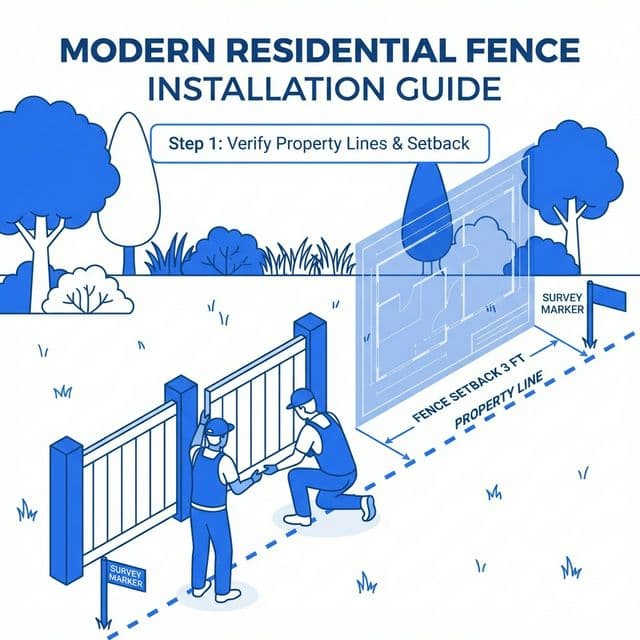
Fence Permit Rules: Height, Setbacks, and Property Lines Explained
Fence permit rules vary widely by city, but the same handful of factors—height, yard location, setbacks, corner-lot sightlines, and your true property line—decide nearly every case. Here's how to read them for your lot.