
How Much Does a Building Permit Cost?

Direct Answer: A residential building permit in the United States usually costs anywhere from a small flat fee of roughly $30–$150 for minor work up to several hundred or a few thousand dollars for larger projects, because most jurisdictions calculate the fee from your project's valuation (estimated construction cost) or from square footage rather than charging one flat price. The exact number depends entirely on local rules — your municipality's published fee schedule, whether plan review and separate trade (electrical, plumbing, HVAC) permits apply, and add-ons like a state surcharge or seal. Always confirm against your jurisdiction's current published fee schedule, because two towns a few miles apart can charge very different amounts for the same deck.
Key Takeaways
- The question "how much does a building permit cost" almost never has a single answer: most fees are valuation-based (a percentage or sliding scale of estimated construction cost) or square-footage-based, not flat.
- Small or accessory projects (fences, sheds, small decks) are more likely to carry a flat or minimum fee, often in the $30–$150 range, while additions and new structures scale up with size or value.
- The base permit fee is frequently not the whole bill — plan review, inspection, trade permits, state surcharges/seals, park fees, and administrative fees can each be added.
- Starting work before the permit is issued commonly triggers an after-the-fact penalty, frequently a doubled (or tripled) fee.
- In Wisconsin, one- and two-family dwelling work runs under the Uniform Dwelling Code (UDC), and a state permit seal is required and billed as a separate line item.
- The only reliable way to know your cost is to read your jurisdiction's published fee schedule and identify which permit types your project triggers.
- Budget a contingency: under-stating project valuation can cause a re-calculation, and missed inspections often carry their own re-inspection fees.
On This Page
Jump to any section of this guide:
- What a Building Permit Fee Actually Pays For
- Flat Fee vs. Valuation-Based Fee vs. Square-Footage Fee
- The Add-Ons: Plan Review, Inspections, Surcharges, and Penalties
- When a Permit (and Its Fee) Usually Applies
- Local Variables That Change the Answer
- Documents and Facts to Gather Before You Estimate
- Common Mistakes
- Example Scenarios
- Practical Checklist
- Definitions
- Why Local Rules Change the Answer
- A Local Example: Sturgeon Bay, Door County, Wisconsin
- How GovCodex Helps
- Frequently Asked Questions
What a Building Permit Fee Actually Pays For
A building permit is the local government's authorization to do regulated construction work, and the fee you pay funds the review and inspection of that work — not the construction itself. When people ask how much does a building permit cost, they're usually picturing a single sticker price. In practice, the fee is the government's way of recovering the staff time to (1) review your plans against the adopted building and zoning codes, (2) issue the permit, and (3) send an inspector to verify the work in the field at one or more stages.
Because that workload scales with the size and complexity of the project, most jurisdictions don't charge a flat rate. They tie the fee to a proxy for complexity — either the estimated value of the construction or the square footage of the affected area. A new two-story addition triggers more review and more inspections than a 6-foot privacy fence, so it costs more to permit. Understanding which method your jurisdiction uses is the first step to an accurate budget.
Why this matters
Underestimating permit costs is one of the most common ways DIY and first-time renovation budgets go sideways. The permit fee itself is rarely the budget-buster, but the stack of associated charges — plan review, separate electrical/plumbing/HVAC permits, a state surcharge, and especially after-the-fact penalties — can add up to real money. Worse, skipping a permit to "save" the fee can expose you to stop-work orders, doubled fees, problems at resale, and insurance headaches. Knowing the true, all-in cost lets you make an informed decision instead of an anxious guess. It also helps you sequence the work: many jurisdictions require zoning sign-off before a building permit is even accepted, and discovering that mid-project can stall a job and stack on fees you did not plan for.
Flat Fee vs. Valuation-Based Fee vs. Square-Footage Fee
There are three dominant ways jurisdictions price a building permit. Many use a combination depending on project type.
| Fee method | How it's calculated | Typical use case | What changes the number |
|---|---|---|---|
| Flat / minimum fee | One fixed price, or a floor the fee can't drop below | Small, low-risk work: fences, small sheds, re-roofs, minor accessory structures | The project category; some flat fees still add trade permits |
| Valuation-based fee | A sliding scale or percentage of the estimated construction cost ("job value") | Additions, remodels, new homes, commercial work | Your declared valuation; the jurisdiction may substitute its own cost tables |
| Square-footage fee | A per-square-foot rate (e.g., $0.12–$0.14/sq ft) with a stated minimum | New structures, garages, additions, decks | Total affected/living square footage and the minimum floor |
Flat fees are simplest: you pay the posted amount regardless of project value. They're common for small accessory work where the review burden is predictable.
Valuation-based fees scale with your project's estimated cost. You declare a "job value," and the jurisdiction applies a fee schedule (often a tiered table — so much for the first $1,000 of value, then a smaller increment per additional $1,000). Important caveat: many jurisdictions reserve the right to override your declared valuation with their own standardized cost tables if your number looks low. Don't assume you can shrink the fee by lowballing the value.
Square-footage fees are common in Wisconsin and many Midwestern municipalities for new construction and accessory structures — a per-square-foot rate with a minimum floor. Some Wisconsin towns also use a banded square-footage table, where a whole size range (say, 0–999 sq ft) maps to a single flat price rather than a strict per-foot multiplication. Either way, this method is transparent and easy to estimate once you know your dimensions.
People Also Ask, in short:
- Is the permit fee based on what I'm spending? — Often yes, under a valuation method, but sometimes it's by square footage or flat.
- Can I just pay one fee? — Sometimes, but additions and renovations frequently trigger separate plan-review and trade permits.
- Does a bigger project always cost more to permit? — Generally yes under valuation or square-footage methods.
The Add-Ons: Plan Review, Inspections, Surcharges, and Penalties
The base permit is only part of the picture. Here are the common line items that get added on top.
Plan review fee
For anything beyond the simplest work, the jurisdiction (or a delegated third-party inspector) reviews your drawings before issuing the permit. Some bundle plan review into the base fee; others bill it separately, sometimes as a percentage of the permit fee or per a state plan-review schedule. Commercial projects almost always carry a distinct, larger plan-review fee.
Inspection fees
Inspections may be bundled into the base permit or billed per inspection. Where they're separate, watch for two costly extras: a re-inspection fee (if work fails and the inspector has to return) and a failure-to-call / missed-inspection fee (if you proceed past a required inspection stage without scheduling it). These commonly run in the $50–$75-per-occurrence range, though some towns set them higher.
Trade permits (electrical, plumbing, HVAC)
Building, electrical, plumbing, and mechanical permits are often separate permits with separate fees. A kitchen remodel can easily need all four. If you're budgeting from the building permit alone, you may be missing a meaningful chunk. Our guide to the difference between building, zoning, electrical, and plumbing permits breaks down which is which.
State surcharge / permit seal
Some states add a mandatory surcharge or seal on top of the local fee. In Wisconsin, one- and two-family dwelling construction is governed by the statewide Uniform Dwelling Code (UDC), and a state permit seal must be affixed to the permit — billed as its own line item by the issuing municipality. This is a fixed, modest amount, but it's not optional and it's easy to forget when budgeting.
Administrative and impact-style fees
Municipalities sometimes layer on a small administrative fee (a flat amount or a percentage of the total) and, for new dwelling units, park/playground or impact fees that can be a few hundred dollars per unit. Erosion control permits may apply to ground-disturbing work over a certain area, and some towns add a street tree deposit or similar site fee.
After-the-fact penalty
If you start regulated work before the permit is issued, most jurisdictions charge an after-the-fact penalty — very commonly double the normal fee, and sometimes triple. This is the single most avoidable permit cost. The fix is simple: get the permit before you build.
When a Permit (and Its Fee) Usually Applies
You generally need a building permit — and therefore owe a fee — when you do work that affects the structure, safety, or regulated systems of a building. Whether a permit is required is ultimately set by your local ordinance, but typical triggers include:
- New structures and additions (more habitable or enclosed space)
- Decks above a certain height, and most attached structural work (see do I need a permit to build a deck)
- Garages and larger accessory buildings (see can I build a garage or shed in my backyard)
- Electrical, plumbing, mechanical/HVAC work
- Structural alterations, re-framing, or changing a building's use
- Fences in many jurisdictions (often a low flat fee — see fence permit rules)
When exceptions may apply
Many jurisdictions exempt small, low-risk work: small sheds under a square-footage threshold, like-for-like repairs, paint, flooring, cabinetry, and some low decks or patios. But exemptions are local and specific — a shed that's permit-free in one town may need a permit in the next. And a building exemption doesn't always exempt the electrical or plumbing work inside it. Our piece on when a DIY project becomes a code problem walks through the gray zones. Never assume "small = exempt" without checking the actual ordinance.
Local Variables That Change the Answer
The same deck can carry very different permit costs depending on:
- Which municipality and county you're in, and whether the jurisdiction is a town, village, or city.
- The adopted code and fee method — flat, valuation, or square footage, and the specific dollar rates and minimums.
- Your zoning district and any overlays — which can require separate zoning approval, a setback review, or impervious surface coverage checks before the building permit is issued.
- Sensitive-area overlays — shoreland, wetland, floodplain, or historic districts can add review steps and fees, and in Wisconsin shoreland zoning is often administered at the county level.
- Project size, height, use, and method — and whether the work is attached, structural, habitable, wired, plumbed, or heated.
- Whether trade permits and a state surcharge/seal apply.
Documents and Facts to Gather Before You Estimate
To estimate your permit cost accurately, collect:
- Project description and dimensions — square footage of affected/living area, height, number of stories.
- Estimated construction value — material + labor, as honestly as you can; this drives valuation-based fees.
- Your parcel details — address, parcel ID, zoning district, lot size.
- A site plan or survey showing the structure's location relative to property lines and setbacks.
- The jurisdiction's current fee schedule (usually a posted PDF).
- The list of permit types your work triggers — building, zoning, electrical, plumbing, mechanical, erosion control.
- Any state surcharge/seal that applies to your project class.
The permit application checklist for home renovations is a good companion to this list, and how to estimate the cost of a home addition helps you set the construction valuation that drives the fee.
Common Mistakes
- Budgeting only the base permit fee and forgetting plan review, trade permits, surcharges, and admin fees.
- Lowballing project valuation to shrink the fee — jurisdictions can override with their own cost tables, and a discovered understatement erodes trust.
- Starting work before the permit issues, triggering a doubled or tripled after-the-fact penalty.
- Missing inspection stages, which adds re-inspection and missed-inspection fees.
- Assuming a building exemption covers electrical/plumbing — the trades often need their own permits.
- Comparing to a neighbor's cost in a different municipality, where the fee method and rates differ.
Example Scenarios
Scenario 1 — Backyard privacy fence. Fences are often a low flat fee. Estimated permit cost: a single flat charge (commonly $30–$75). No plan review; usually no trade permits. The real constraint is height and setbacks, not cost.
Scenario 2 — Detached storage shed / garage (accessory structure). Frequently a square-footage fee with a minimum floor (e.g., $0.10–$0.15/sq ft, $50 minimum), plus possible electrical permit if you're wiring it. A modest shed lands near the minimum; a large garage scales up.
Scenario 3 — Attached addition. Now you're likely in valuation-based or square-footage territory with a higher per-unit rate, plus plan review, plus trade permits for any new wiring/plumbing/HVAC, plus any state surcharge/seal and erosion-control fee for ground disturbance. This is where total permit cost can reach several hundred to a few thousand dollars.
Scenario 4 — You already built it without a permit. Expect the normal fee doubled (or tripled) as an after-the-fact penalty, plus possible inspection of concealed work that may need to be re-opened. The cheapest path is always to permit first.
Practical Checklist
- Identify your municipality and county, and confirm who issues permits there.
- Find and download the current fee schedule (PDF).
- Determine the fee method for your project type: flat, valuation, or square footage.
- Calculate the base fee from your dimensions or declared valuation.
- Add plan review (if separate).
- Add each trade permit you'll need (electrical, plumbing, HVAC).
- Add any state surcharge / seal.
- Add administrative, park/impact, and erosion-control fees if applicable.
- Confirm whether zoning approval is a separate, prior step.
- Budget a contingency for re-inspection / missed-inspection fees.
- Get the permit before you start to avoid after-the-fact penalties.
Definitions
- Building permit — Local authorization to perform regulated construction; the fee funds review and inspection.
- Valuation (job value) — The estimated total construction cost used to compute valuation-based fees.
- Flat / minimum fee — A fixed permit charge, or the lowest the fee can be regardless of size.
- Plan review fee — Charge for examining your drawings against adopted codes before issuance.
- Inspection / re-inspection fee — Charge for field verification; re-inspection applies when work fails or an inspector must return.
- Trade permits — Separate electrical, plumbing, and mechanical/HVAC permits with their own fees.
- State surcharge / permit seal — A state-mandated add-on; in Wisconsin, the UDC permit seal for one- and two-family dwellings.
- After-the-fact penalty — An increased fee (often double or triple) for starting work before the permit is issued.
- Fee schedule — The jurisdiction's published list of all permit and service fees.
- Erosion control permit — A permit for ground-disturbing work above a certain area, often with its own fee.
Why Local Rules Change the Answer
There is no national building-permit price because permitting is administered locally, under codes adopted at the state and local level. The cost you pay is shaped by a stack of variables:
- Municipality and jurisdiction type. A city, village, and town can each run different fee schedules and may delegate inspection to a third-party firm. Start with your exact governing body, not the county generally.
- County overlays. Shoreland, floodplain, and some zoning functions are often administered at the county level in Wisconsin, adding separate review and fees on top of the city building permit.
- State code adoption. Wisconsin's Uniform Dwelling Code (SPS 320–325) governs one- and two-family dwellings statewide and requires a permit seal, which shows up as its own fee line.
- Zoning district and overlays. Your district sets setbacks, height, and coverage limits; an overlay (historic, shoreland-wetland) can require approvals before the building permit, each with a fee. See how to read a zoning map.
- Parcel specifics. Lot lines, easements, and existing impervious coverage can force redesigns or a zoning variance — which is itself a separate, often larger fee.
- Project attributes. Size, height, use, and whether the work is attached, structural, habitable, wired, plumbed, or heated all change which permits trigger.
Rather than "call your local office" as a first move, read these named sources first: your municipality's fee schedule PDF, its building code chapter in the municipal code, the building permit application form, the zoning ordinance for your district's standards, and — in Wisconsin — the state UDC seal requirement in SPS 320. Reach out to the building office only to confirm a value those documents leave ambiguous. The companion guide how to find your local building code shows where these documents usually live.
A Local Example: Sturgeon Bay, Door County, Wisconsin
This worked example separates the general rule from the local specifics, sourced from the City of Sturgeon Bay's published fee schedule (effective April 8, 2026) and Wisconsin's UDC. Values not stated in those sources are marked needs_research.
General rule: A residential building permit is usually computed by square footage or valuation, plus add-ons for plan review, trades, a state seal, and various municipal fees, with penalties for unpermitted starts.
Sturgeon Bay specifics (from the city's published fee schedule):
| Item | Sturgeon Bay amount (as published) |
|---|---|
| State Seal (Wisconsin UDC, 1 & 2 family) | $40.00 |
| Park & Playground Fee (all new 1 & 2 family dwellings) | $300.00 per unit |
| New 1 & 2 family home — base building permit (banded by sq ft of all living area, full basement, deck/porch & attached garage) | $750.00 (0–999 sq ft) up to $1,150.00 (2,500–3,000 sq ft); over 3,000 sq ft = $1,150 + $0.15/sq ft over 3,000 |
| Additions / remodeling / alterations / decks — Building | $0.12 per sq ft (all areas), $75.00 minimum |
| Accessory structures (detached garages, storage buildings, decks) — Building | $0.12 per sq ft, $50.00 minimum |
| Commercial — new buildings / additions / alterations / remodels — Building | $0.14 per sq ft, $100.00 minimum |
| Storage building / warehouse / detached garage | $0.12 per sq ft |
| Electrical permit only | $0.05 per sq ft ($75.00 min, $750.00 max) |
| Erosion Control (additions only, below grade over 400 sq ft) | $40.00 |
| Fence Permit | $50.00 |
| Driveway Permit | $50.00 |
| Re-Inspection Fee | $60.00 |
| Failure to Call for Inspection (each missed) | $60.00 per inspection |
| Permit Extension (permits valid 24 months) | 25% of original fee (or minimum) |
| City Administrative Fee — permits up to $100 | $3.00 |
| City Administrative Fee — permits $100 and over | 5% of total fee |
| Double fees | due if work is started before the permit is issued |
| Commercial plan review | Per SPS 302.31 / delegated municipality schedule — needs_research |
So, in Sturgeon Bay, a new detached garage's building permit starts at the $0.12/sq ft accessory rate with a $50 minimum, then a homeowner typically adds the 5% city administrative fee (or $3 for small permits), any electrical permit ($0.05/sq ft, $75 min), and — for a new dwelling — the $40 state seal and $300/unit park fee. A brand-new one- or two-family home, by contrast, uses the city's banded square-foot table, where the building permit alone runs from $750 for the smallest homes up to $1,150 at the 2,500–3,000 sq ft band (and more above that), with the state seal and park fee on top. Start the work early and the city's double-fee rule applies. Building code administration and inspection in Sturgeon Bay are handled by a delegated third-party inspector (Inspection Specialists, LLC) at City Hall, which is common for smaller Wisconsin municipalities. Always confirm against the current fee schedule, because the city updates it (the version cited here is effective April 8, 2026, and the department page may link an earlier edition).
Note: the new-home banded table covers building, electric, electric meter service, plumbing, HVAC, and erosion control for the dwelling itself, but the commercial plan-review line references SPS 302.31 sub-schedules that should be verified directly with the delegated municipality; treat that figure as needs_research.
How GovCodex Helps
GovCodex is a local-code-aware planning and permitting assistant — not a generic chatbot — built to take you from "I want to build this" to "I understand the rules, costs, documents, and next steps for my property." For permit-cost questions specifically, it helps you:
- Identify which permits your project triggers (building, zoning, electrical, plumbing, mechanical, erosion control) so your budget isn't missing a line.
- Interpret your local fee schedule and code — flat vs. valuation vs. square-footage methods, minimums, and surcharges — instead of guessing from a national average.
- Gather the right facts (square footage, valuation, parcel ID, zoning district) and upload your survey, site photos, or permit PDFs for analysis.
- Build a permit-readiness checklist tailored to your jurisdiction and project type.
- Draft project descriptions and site-plan notes, and compare options (e.g., detached vs. attached, sizing under an exemption threshold) and their cost implications.
- Flag missing information and clearly separate confirmed facts from assumptions, so you know what still needs verification.
- Find the right application form and surface localized next steps, including any state surcharge or seal.
GovCodex keeps humans in the loop where judgment is required, and it never invents a local rule it can't support.
Describe your project, upload any site documents or photos you already have, and GovCodex can help organize the rules, documents, and next steps for your property.
Frequently Asked Questions
How much does a building permit cost on average?
There's no reliable national average because fees are set locally, but minor work often falls in a flat or minimum range of roughly $30–$150, while additions and new structures scale with square footage or valuation into the hundreds or low thousands. The honest answer is that you must read your jurisdiction's fee schedule for your project type. Add-ons like plan review, trade permits, and surcharges can change the total significantly.
Is a building permit fee based on the cost of the project?
Often, yes — many jurisdictions use a valuation-based fee tied to your estimated construction cost. Others use a per-square-foot rate or a flat fee, and many mix methods by project type. If your area uses valuation, note that it may override a declared value with its own standardized cost tables.
What is a plan review fee?
It's a charge for examining your drawings against the adopted building and zoning codes before the permit is issued. Some jurisdictions bundle it into the base permit fee, while others bill it separately, sometimes as a percentage of the permit fee or per a state plan-review schedule. Commercial projects almost always have a distinct, larger plan-review fee.
Why is there a separate inspection or re-inspection fee?
Inspections verify the work in the field at required stages, and some jurisdictions bill them separately from the base permit. A re-inspection fee applies when work fails inspection or the inspector must return, and a missed-inspection fee can apply if you proceed past a required stage without scheduling it. These commonly run around $50–$75 per occurrence, and in some towns higher — Sturgeon Bay, for example, charges $60 each.
What is an after-the-fact permit penalty?
It's an increased fee charged when you start regulated work before the permit is issued. Many jurisdictions double the normal fee, and some triple it. The cheapest way to avoid it is simply to obtain the permit before beginning work.
What is the Wisconsin state seal or surcharge?
Wisconsin's Uniform Dwelling Code (UDC) governs one- and two-family dwelling construction statewide, and a state permit seal must be affixed to the permit. The issuing municipality bills it as a separate line item — in Sturgeon Bay, for example, the State Seal is listed at $40.00. It's a small but mandatory add-on for covered dwelling work.
Do I need separate permits for electrical and plumbing?
Frequently, yes. Building, electrical, plumbing, and mechanical permits are often separate permits with their own fees. A remodel that touches multiple systems can require several permits, so budget for each rather than assuming one building permit covers everything.
Can I lower my permit fee by reporting a lower project value?
It's risky and often counterproductive. Many jurisdictions reserve the right to substitute their own standardized cost tables if a declared valuation looks low, so under-reporting may not reduce the fee. It can also undermine trust and create problems if the discrepancy is discovered.
Where do I find my jurisdiction's fee schedule?
Most municipalities publish a fee schedule PDF on their building, community development, or clerk's webpage, and the building code chapter lives in the online municipal code. Start there, and use the permit application form to see which sections apply to your project. Contact the office only to confirm values the documents leave ambiguous.
Does a fence or small shed need a permit fee?
Often a fence carries a low flat fee, and small sheds may be exempt or charged a minimum or per-square-foot fee, depending on local thresholds. Even when the structure is exempt, any wiring or plumbing you add can still require a separate permit. Always check your local ordinance rather than assuming small means free.
How much should I budget beyond the base permit fee?
Plan for plan review (if separate), each applicable trade permit, any state surcharge or seal, administrative and park/impact fees, and a contingency for re-inspection fees. For a larger addition, these add-ons can collectively rival or exceed the base permit fee. Building this stack out line-by-line is the only way to get an accurate number.
Will my permit cost the same as my neighbor's?
Not necessarily — if your neighbor is in a different municipality, the fee method and rates can differ even for an identical project. Within the same jurisdiction, costs still vary by square footage, valuation, and which permits each project triggers. Compare against your own jurisdiction's fee schedule, not anecdotes.
Related Articles
When Does a DIY Project Become a Code Problem?
The line between a weekend project and a code problem isn't about how hard the work is — it's about what you touch. Here's how to tell when DIY needs a permit.
Can I Turn My Garage Into an Apartment?
Whether you can convert a garage to an apartment ADU depends on your zoning district, parking, utilities, and building-code rules like egress and fire separation. Here's how to find your real answer.
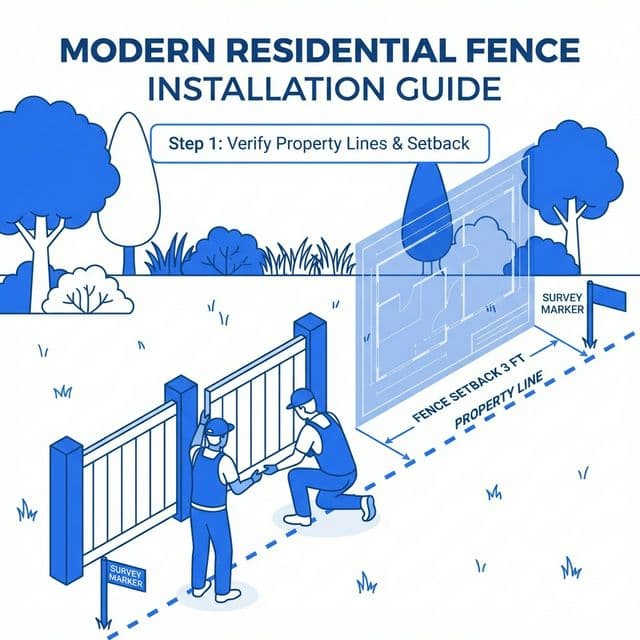
Fence Permit Rules: Height, Setbacks, and Property Lines Explained
Fence permit rules vary widely by city, but the same handful of factors—height, yard location, setbacks, corner-lot sightlines, and your true property line—decide nearly every case. Here's how to read them for your lot.